
T shirt silkscreen printing has transformed the custom apparel industry by offering a cost-effective, durable, and vibrant method for creating personalized designs. This time-tested technique, also known as screen printing, continues to dominate the commercial printing landscape in 2026, particularly for businesses and organizations seeking high-quality, long-lasting graphics on garments. Whether you're a small business owner looking to create branded merchandise or an individual interested in understanding professional printing methods, mastering the fundamentals of t shirt silkscreen opens up endless creative possibilities. From its historical roots to modern applications, this comprehensive guide explores everything you need to know about this versatile printing method.
Understanding T Shirt Silkscreen Basics
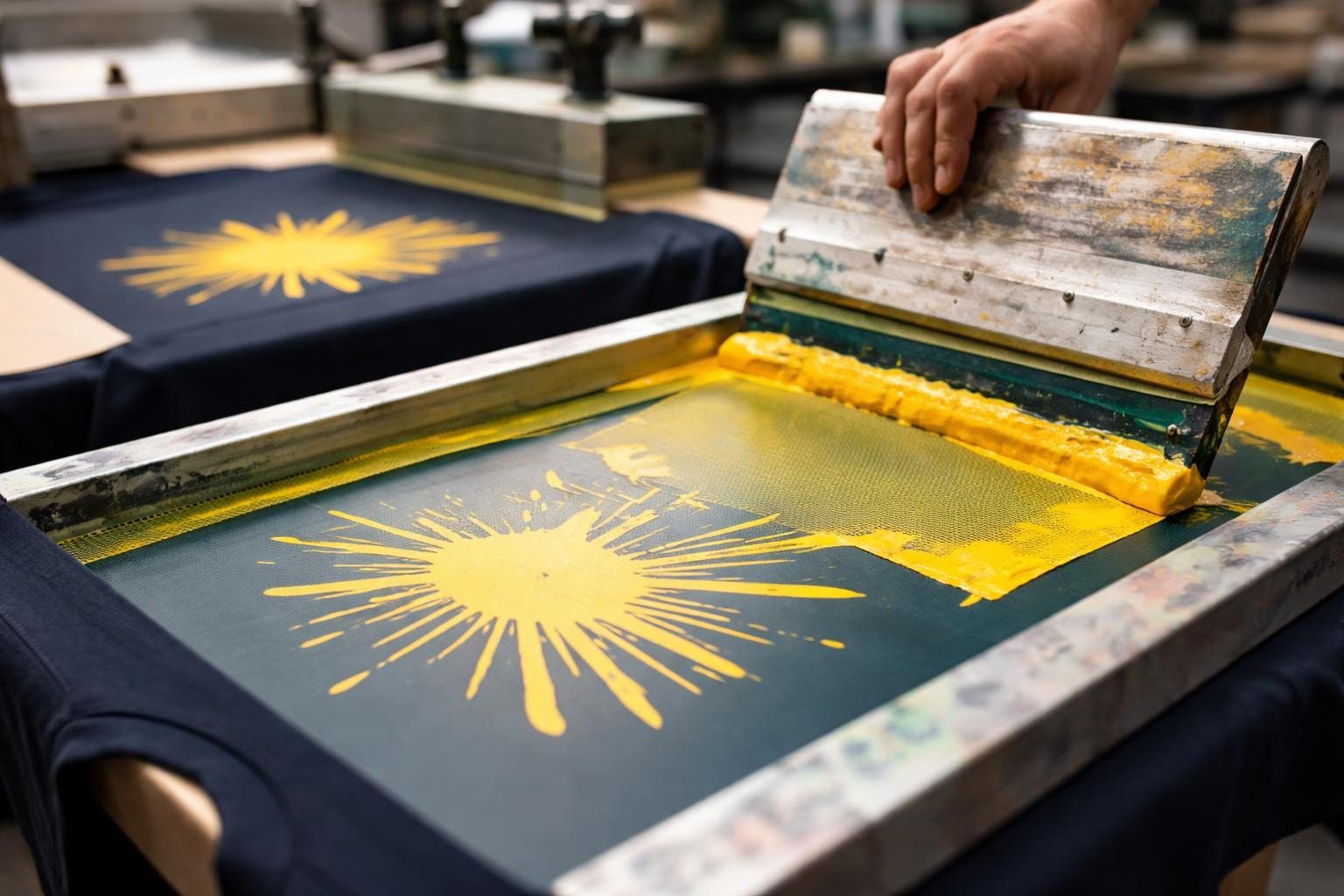
T shirt silkscreen operates on a straightforward principle: forcing ink through a mesh screen onto fabric in specific patterns to create designs. The process involves creating a stencil (or screen) where certain areas block ink while others allow it to pass through, resulting in precise, crisp images on the garment surface.
The screen itself consists of a fine mesh stretched tightly across a frame, traditionally made from silk but now commonly constructed from synthetic materials like polyester or nylon. Each color in a design requires a separate screen, making this method particularly economical for bulk orders where setup costs distribute across multiple pieces.
Key Components of the Process
Understanding the essential elements helps demystify how professionals achieve consistent, high-quality results:
- Mesh screens: Different mesh counts (threads per inch) accommodate various design details
- Emulsion: Light-sensitive coating that creates the stencil when exposed to UV light
- Squeegee: Tool that spreads ink evenly across the screen
- Plastisol or water-based inks: Specialized formulations designed for fabric adhesion
- Substrate preparation: Proper garment positioning and treatment before printing
The mesh count significantly impacts print quality. Lower counts (110-160) work best for heavy ink deposits and bold graphics, while higher counts (200-305) produce finer details and smoother gradients. Professional operations like Custom 101 Prints maintain various mesh counts to accommodate different design requirements.
Historical Evolution and Modern Applications
The origins of t shirt silkscreen trace back to ancient China, where artisans developed early stenciling techniques. However, the modern screen printing process emerged in the early 20th century, gaining particular prominence during the 1960s when artists and activists recognized its potential for mass-producing affordable art and political messages.
According to Roland DGA’s comprehensive timeline, the evolution of t-shirt printing paralleled cultural movements, with silkscreen becoming the preferred method for concert merchandise, sports teams, and corporate branding. The National Serigraph Society played a crucial role in elevating screen printing from commercial technique to recognized art form during the mid-20th century.
Current Industry Trends
| Application Area | Primary Benefits | Typical Order Sizes |
|---|---|---|
| Corporate Branding | Consistent color matching, durability | 50-5000+ pieces |
| Event Merchandise | Cost-effective bulk production | 100-1000 pieces |
| Fashion Lines | Vibrant colors, specialty inks | 25-500 pieces |
| Promotional Items | Fast turnaround, multiple substrates | 100-2000 pieces |
In 2026, businesses increasingly combine traditional t shirt silkscreen with digital methods, creating hybrid workflows that maximize efficiency. Many operations now integrate screen printing with DTG capabilities to serve diverse client needs.
Setting Up a Silkscreen Operation
Establishing a t shirt silkscreen workspace requires careful planning and appropriate equipment selection. Whether creating a professional studio or a home-based operation, understanding spatial requirements and tool specifications ensures successful results.
Space considerations include adequate ventilation for ink fumes, proper lighting for screen exposure and color matching, and organized storage for screens, inks, and supplies. A typical small-scale setup occupies approximately 150-300 square feet, while commercial operations require 1000+ square feet for multiple presses and curing equipment.
Essential Equipment Investment
Starting a basic t shirt silkscreen operation involves these fundamental tools:
- Screen printing press (manual, semi-automatic, or automatic based on volume)
- Exposure unit for burning designs onto screens
- Flash cure or conveyor dryer for ink curing
- Screen coating and reclaiming station
- Quality squeegees in various durometer ratings
Manual presses serve small businesses and custom orders effectively, with single-color setups starting around $300-500 and multi-color carousel systems ranging from $1,500-5,000. Automatic presses, capable of producing hundreds of shirts hourly, represent significant investments of $15,000-100,000+ but deliver unmatched production capacity.
Those interested in smaller-scale operations can explore DIY silkscreen methods to understand fundamentals before committing to larger equipment purchases.
Creating Designs for Screen Printing
Design preparation significantly impacts t shirt silkscreen success. Unlike digital printing methods that handle photographic images and complex gradients easily, screen printing works best with solid colors, bold graphics, and simplified artwork.
Design Optimization Strategies
Color separation represents the most critical design skill for screen printing. Each color requires its own screen, so limiting color count reduces setup time and costs. Experienced designers create stunning multi-color effects using halftones, overprinting, and strategic color placement rather than excessive color counts.
Vector graphics produce superior results compared to raster images because they maintain crisp edges at any size. Software like Adobe Illustrator, CorelDRAW, or free alternatives like Inkscape enable proper file preparation with separated color layers, appropriate resolution, and correct sizing.
- Convert all text to outlines to prevent font substitution issues
- Maintain minimum line thickness of 0.5 points for reliable reproduction
- Use spot colors rather than process colors for accurate matching
- Account for underbase layers on dark garments
- Design with final garment color in mind for optimal contrast
Professional services offering t-shirt graphic printing typically provide design consultation to ensure artwork translates effectively to the screen printing process.
The Screen Preparation Process
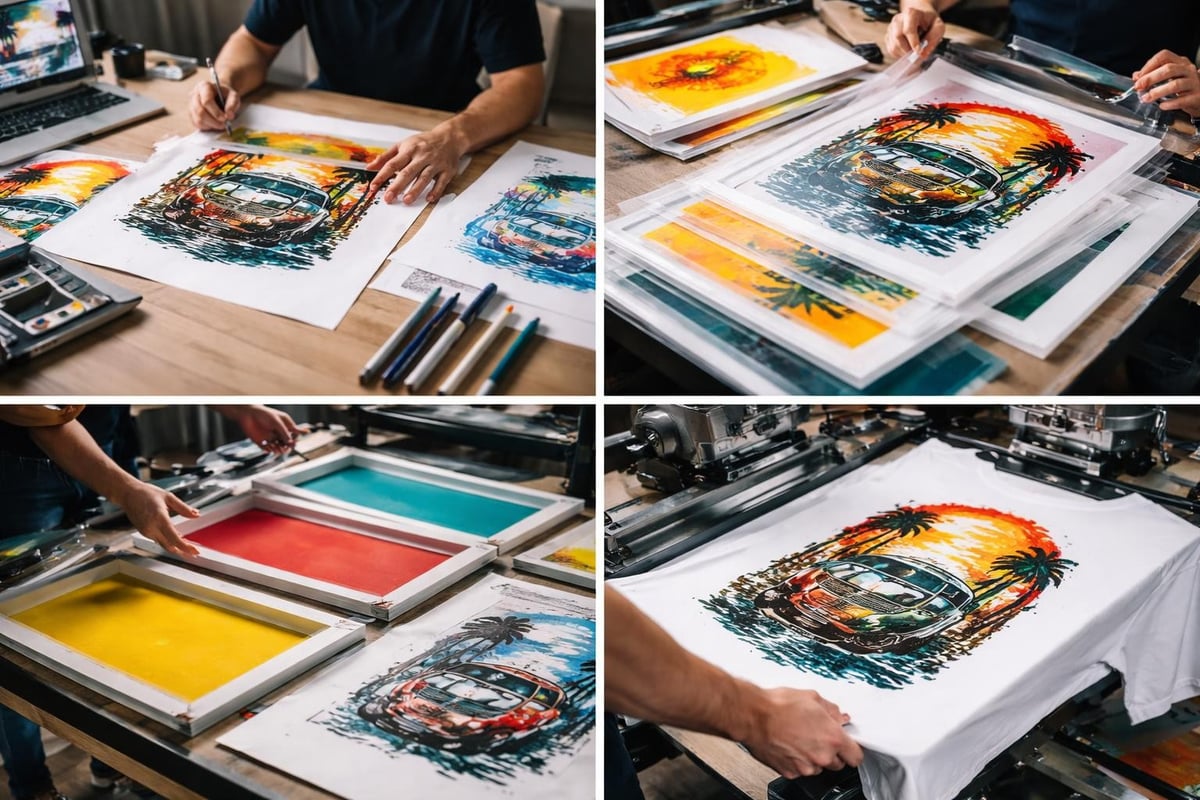
Creating screens represents the foundation of quality t shirt silkscreen production. This multi-step process requires precision and consistency to achieve repeatable results across production runs.
Screen Coating and Exposure
The process begins with thoroughly cleaning and degreasing screens to ensure proper emulsion adhesion. Emulsion application requires controlled conditions-dim lighting prevents premature exposure while maintaining visibility for even coating on both screen sides.
Most operations use scoop coaters to apply emulsion in thin, uniform layers. The coated screen then dries in a dark environment, taking 2-6 hours depending on humidity and emulsion type. Some facilities use drying cabinets to accelerate this stage while maintaining environmental control.
Once dry, the screen undergoes exposure using UV light and a positive film or transparency. Light hardens exposed emulsion while areas blocked by the design remain soft and water-soluble. Exposure times vary based on:
- Emulsion type and thickness
- UV light intensity
- Mesh count
- Ambient temperature
After exposure, washing the screen with water pressure removes unexposed emulsion, revealing the open mesh that will allow ink passage. Detailed guides like this step-by-step screen printing tutorial demonstrate proper exposure and washout techniques.
Printing Techniques and Best Practices
Executing a successful t shirt silkscreen print combines technical knowledge with practiced technique. The actual printing process, while seemingly simple, requires attention to multiple variables affecting final quality.
Flood and print strokes form the basic printing motion. The flood stroke pushes ink across the screen without forcing it through the mesh, filling the image area. The print stroke then applies pressure with the squeegee, forcing ink through open mesh areas onto the garment.
Critical Printing Variables
| Variable | Impact on Print | Adjustment Range |
|---|---|---|
| Squeegee angle | Ink deposit thickness | 30-60 degrees |
| Squeegee pressure | Coverage and edge sharpness | Light to firm |
| Print speed | Ink transfer efficiency | 4-12 inches/second |
| Off-contact distance | Print sharpness | 1/16 – 1/8 inch |
Registration accuracy ensures multiple colors align perfectly. Professional presses include micro-registration adjustments, while manual operations rely on careful setup and consistent technique. Even slight misalignment creates noticeable defects in multi-color designs.
Many New York businesses rely on professional screen printing services that maintain calibrated equipment and experienced operators to ensure consistent registration and color matching across large production runs.
Ink Selection and Color Matching
Choosing appropriate ink types dramatically affects t shirt silkscreen durability, appearance, and feel. The two primary categories-plastisol and water-based inks-offer distinct characteristics suited to different applications.
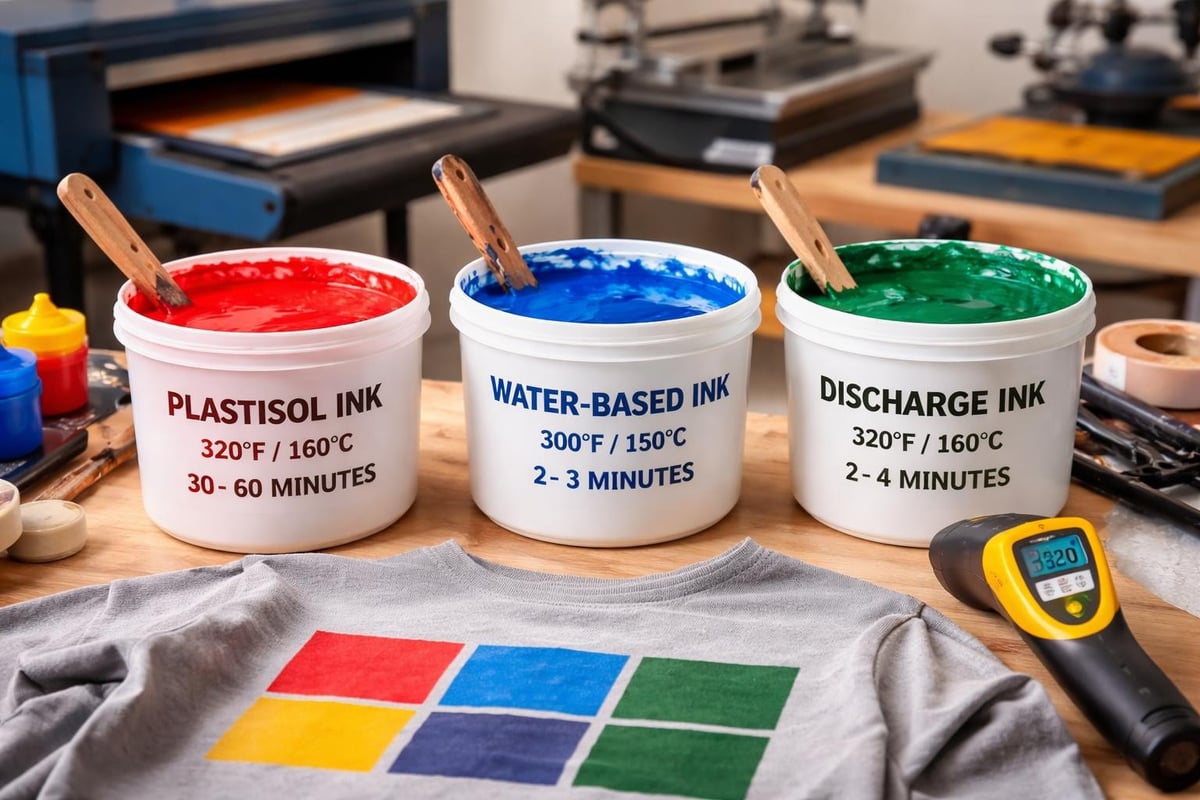
Plastisol inks dominate commercial screen printing due to their versatility and user-friendly properties. These PVC-based inks don't dry in the screen, allowing extended production runs without cleanup interruptions. They cure at specific temperatures (typically 320°F) rather than through evaporation, producing durable prints that withstand repeated washing.
Specialty Ink Options
Modern t shirt silkscreen operations stock various specialty inks for unique effects:
- High-density inks: Create raised, tactile surfaces
- Puff additives: Expand during curing for 3D effects
- Metallic inks: Add shimmer and shine
- Glow-in-the-dark: Phosphorescent pigments for novelty items
- Discharge inks: Remove garment dye while adding color
Water-based inks produce softer prints that integrate into fabric fibers rather than sitting atop them. These environmentally friendly options require different handling-they dry in screens and need immediate cleanup-but deliver superior hand-feel, particularly on light-colored garments.
Color matching uses standardized systems like Pantone to ensure consistency across orders. Professional operations maintain extensive ink mixing records and use spectrophotometers for precise color formulation.
Production Workflow and Quality Control
Efficient t shirt silkscreen production requires systematic workflows that maintain quality while maximizing throughput. Professional operations develop standardized procedures covering every stage from order intake through final inspection.
Pre-production preparation includes artwork approval, screen preparation, ink mixing, and press setup. Thorough preparation prevents costly errors and production delays. Test prints on scrap fabric verify registration, color accuracy, and coverage before committing to actual garments.
Quality Checkpoints
Implementing regular quality checks throughout production ensures consistent results:
- Pre-print inspection: Verify garment condition, size, and color
- First-piece approval: Confirm design placement, colors, and registration
- In-production monitoring: Check random pieces every 25-50 prints
- Cure testing: Verify ink adhesion through wash or stretch tests
- Final inspection: Examine all pieces for defects before packaging
High-volume operations often dedicate personnel specifically to quality control, removing defective pieces and maintaining production standards. For businesses needing reliable production, partnering with established providers offering same day custom shirts ensures access to proven quality systems.
Curing and Finishing Requirements
Proper curing transforms wet ink into a durable, wash-resistant finish. Incomplete curing leads to premature print failure, making this stage critical for t shirt silkscreen longevity.
Heat application methods vary based on operation scale and ink type. Flash cure units quickly set individual colors during multi-color printing, allowing overprinting without smearing. Conveyor dryers provide consistent, controlled curing for final prints, with garments passing through heated chambers at precisely calibrated temperatures and dwell times.
Belt speed and temperature settings depend on ink type, deposit thickness, and garment composition. Standard plastisol requires exposure to 320°F for adequate duration-typically 30-60 seconds in a conveyor dryer. Under-curing leaves ink soft and vulnerable, while over-curing can scorch fabrics or yellow certain ink colors.
Post-Production Steps
After curing, finished garments undergo final processing:
- Cooling: Prevents ink tackiness and allows proper folding
- Inspection: Final quality check for defects or imperfections
- Folding and packaging: Professional presentation for delivery
- Inventory management: Tracking and storage for large orders
Operations prioritizing fast turnaround, like those providing custom printed shirts fast, optimize curing and finishing workflows to minimize production time while maintaining quality standards.
Troubleshooting Common Issues
Even experienced operators encounter t shirt silkscreen challenges. Understanding common problems and their solutions minimizes waste and maintains production efficiency.
Ink bleeding occurs when ink spreads beyond design edges, creating fuzzy or blurred prints. Causes include excessive ink deposit, incorrect squeegee angle, or inadequate off-contact distance. Solutions involve adjusting pressure, using appropriate mesh counts, and ensuring proper screen setup.
Frequent Problems and Fixes
| Issue | Likely Cause | Solution |
|---|---|---|
| Poor opacity | Insufficient ink deposit | Increase squeegee pressure or add stroke |
| Pinholes | Dust or emulsion defects | Clean screens thoroughly, check emulsion |
| Registration drift | Temperature changes | Control environment, allow warm-up time |
| Uneven coverage | Inconsistent pressure | Practice technique, check squeegee condition |
Mesh marks appear as subtle lines in solid areas, resulting from visible screen mesh. Using higher mesh counts, adjusting ink viscosity, or adding multiple strokes typically eliminates this problem. Resources like EZScreenPrint’s comprehensive guides offer detailed troubleshooting for various printing challenges.
Business Considerations and Pricing
Understanding t shirt silkscreen economics helps businesses price services competitively while maintaining profitability. Unlike digital methods with consistent per-piece costs, screen printing follows economies of scale-higher quantities reduce per-unit expenses.
Setup costs include screen preparation, ink mixing, and press configuration. These fixed expenses distribute across the order quantity, making small runs relatively expensive per piece while large runs become highly economical. Most operations establish minimum order quantities or charge setup fees for small batches.
Cost Structure Analysis
Breaking down typical expenses reveals pricing factors:
- Materials: Blank garments, ink, emulsion, screens
- Labor: Design work, screen prep, printing, quality control
- Overhead: Equipment depreciation, utilities, facility costs
- Consumables: Cleaning supplies, tape, packaging materials
Pricing strategies vary widely. Some operations charge per color per location, while others offer all-inclusive pricing based on quantity and complexity. Transparent pricing builds customer trust and simplifies the ordering process.
For businesses comparing methods, understanding screen printing versus DTG economics helps determine the best approach for specific order types and quantities.
Environmental and Safety Practices
Modern t shirt silkscreen operations increasingly prioritize environmental responsibility and worker safety. Traditional plastisol inks contain PVC and phthalates, raising health and environmental concerns that drive industry evolution.
Water-based ink adoption continues growing as manufacturers improve formulations addressing earlier limitations. These inks eliminate harmful chemicals while producing soft, breathable prints. However, they require different handling procedures and equipment maintenance compared to plastisol.
Safety Protocol Implementation
Responsible operations maintain comprehensive safety programs:
- Proper ventilation systems to control fume exposure
- Personal protective equipment including gloves and respirators
- Material Safety Data Sheet (MSDS) accessibility for all chemicals
- Proper disposal procedures for waste inks and cleaning solvents
- Regular equipment maintenance preventing mechanical hazards
Chemical exposure risks necessitate understanding product contents and following manufacturer guidelines. Screen reclaiming chemicals, degreasers, and some inks require careful handling and disposal through approved hazardous waste channels.
Regulations continue evolving, with California's Proposition 65 and international REACH standards influencing industry practices nationwide. Staying informed about regulatory requirements protects both workers and businesses from compliance issues.
Comparing Methods and Technologies
While t shirt silkscreen remains the industry standard for many applications, understanding alternative printing methods helps businesses choose appropriate techniques for specific needs. Each method offers distinct advantages depending on order characteristics.
Direct-to-garment (DTG) printing excels at photographic images, complex designs, and small quantities. This digital process applies ink directly to fabric using specialized inkjet technology, eliminating screens and setup costs. However, per-piece costs remain constant regardless of quantity, making it less economical for large orders.
Method Comparison Matrix
| Factor | Screen Printing | DTG | Heat Transfer |
|---|---|---|---|
| Setup cost | High | None | Low |
| Per-piece cost (100+) | Low | High | Medium |
| Color limitations | Economical for 1-4 | Unlimited | Varies by type |
| Detail capability | Good | Excellent | Good |
| Production speed | Fast (high volume) | Moderate | Fast (small runs) |
Embroidery provides premium appearance and exceptional durability, particularly for corporate apparel and outerwear. Thread-based decoration creates dimensional, textured designs that withstand harsh conditions better than any ink-based method.
Businesses offering multiple techniques, like those with comprehensive screen printing services, can recommend optimal methods based on specific project requirements rather than forcing all work through a single process.
Future Trends and Innovations
The t shirt silkscreen industry continues evolving through technological advancement and changing market demands. Several emerging trends will shape the industry through the remainder of this decade.
Automation integration expands beyond high-end automatic presses into auxiliary processes. Automated screen coating systems, robotic garment loading, and computer-controlled curing optimize efficiency and consistency. These technologies reduce labor requirements while improving quality control.
Emerging Developments
Digital hybrid workflows combine screen printing's economic advantages with digital customization capabilities:
- Pre-positioning digital marks guide screen placement for complex layouts
- Digital underbase printing followed by screen-printed top colors
- Variable data integration allowing personalization within screen-printed runs
- Automated color matching systems reducing setup time
Sustainable practices drive continued innovation in water-based inks, biodegradable screens, and solvent-free cleaning systems. Consumer demand for environmentally responsible production influences purchasing decisions, particularly among younger demographics.
Industry consolidation continues as larger operations acquire smaller shops, creating regional powerhouses with diverse capability portfolios. However, specialized boutique operations thrive by offering unique services, premium quality, or exceptional customer experiences that differentiate them from mass-production facilities.
T shirt silkscreen printing combines artistic creativity with technical precision, delivering durable, vibrant custom apparel across countless applications. Understanding the fundamental processes, equipment requirements, and best practices enables businesses and individuals to make informed decisions about custom printing projects. Whether you need promotional merchandise for corporate events, custom designs for retail lines, or personalized apparel for special occasions, Custom 101 Prints offers expert screen printing services with fast turnaround times and no minimum order requirements, serving New York with professional quality and personalized attention to every project.