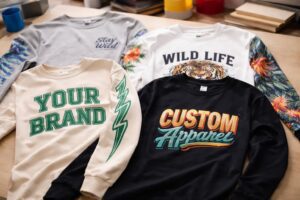
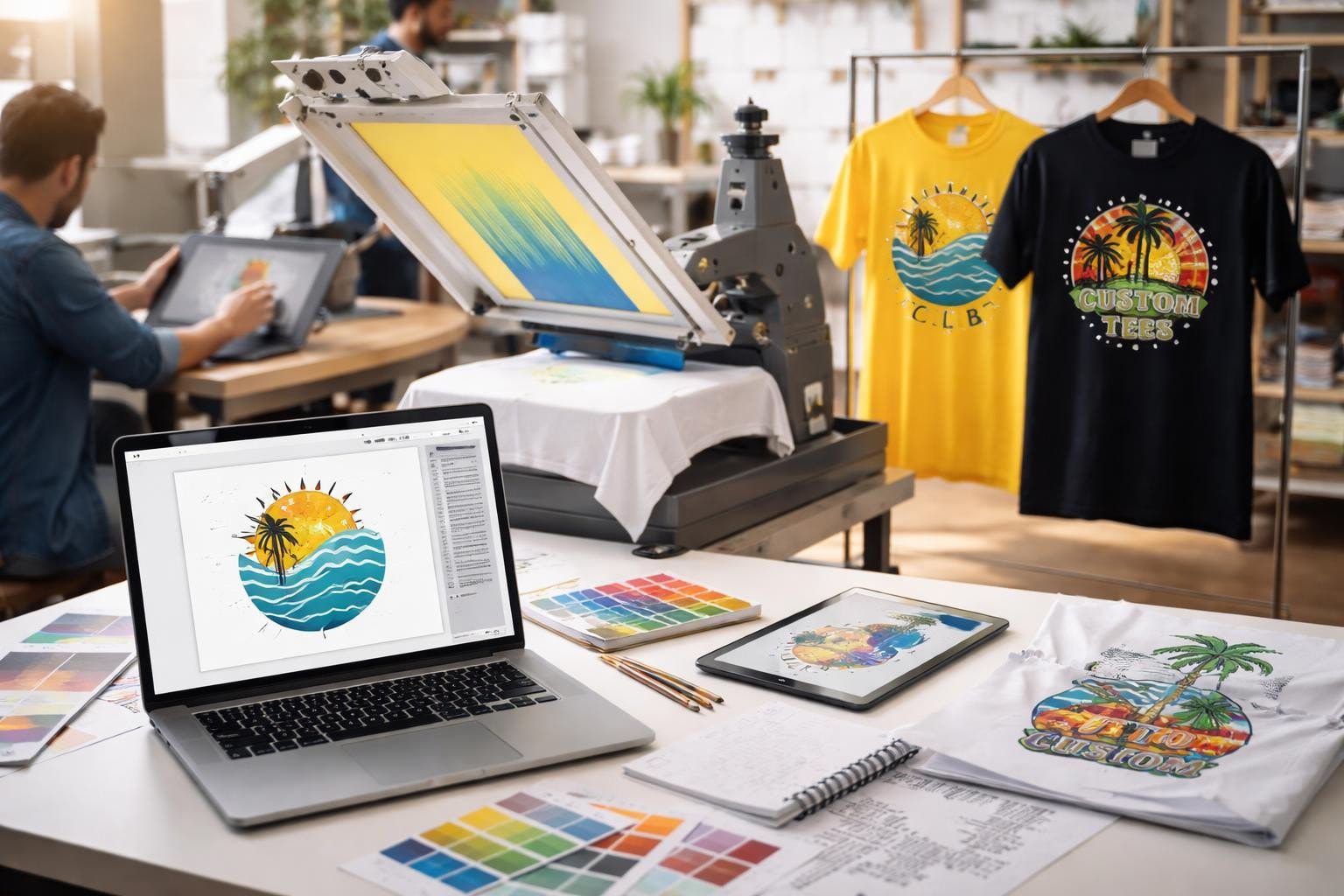
Custom apparel has become an essential tool for businesses, organizations, and individuals looking to make a statement. Whether you're launching a brand, creating team uniforms, or designing promotional merchandise, understanding the available shirt printing options will help you make informed decisions that balance quality, cost, and production time. The custom printing industry has evolved significantly, offering diverse methods that cater to different design complexities, fabric types, and order volumes. This comprehensive guide explores the major printing techniques available in 2026, helping you navigate the choices to find the perfect match for your project needs.
Understanding Screen Printing for High-Volume Orders
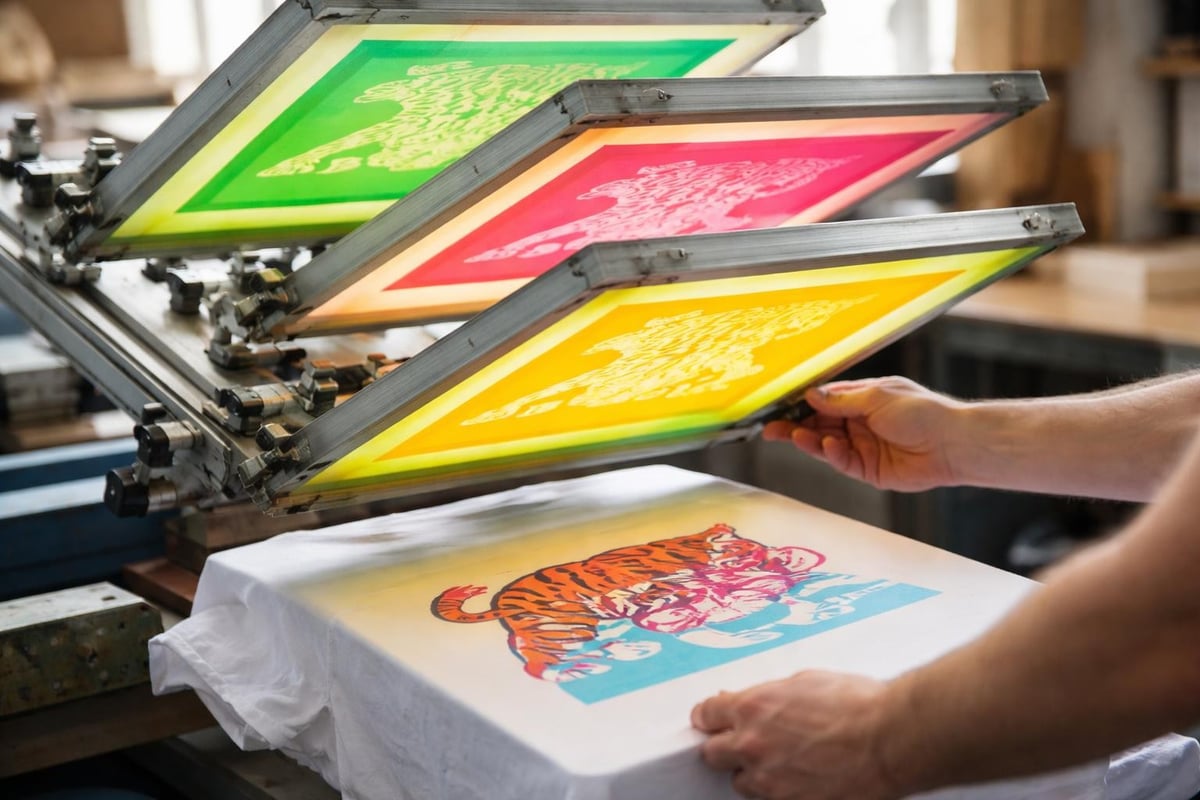
Screen printing remains one of the most popular and cost-effective shirt printing options for bulk orders. This traditional method involves creating stencils (screens) for each color in your design and applying layers of ink through these screens onto the fabric. The process excels when producing large quantities of shirts with the same design, as the setup costs are distributed across many units.
The Screen Printing Process and Benefits
The technique begins with preparing screens for each color in your design, coating them with emulsion, and exposing them to light with your design pattern. Once the screens are ready, ink is pushed through the mesh onto the garment using a squeegee. This method produces vibrant, durable prints that withstand repeated washing and wear.
Key advantages of screen printing include:
- Exceptional durability and longevity of prints
- Vibrant colors that remain bright after multiple washes
- Cost-effectiveness for orders of 24 units or more
- Ability to print on various fabric types and colors
- Specialty ink options including metallic, glow-in-the-dark, and puff inks
Screen printing works particularly well for simple designs with solid colors. The secrets behind New York’s best screen printing services lie in the expertise of separating colors, maintaining consistent ink viscosity, and achieving proper registration across multiple layers.
Limitations to Consider
While screen printing offers numerous benefits, it has some constraints. Complex designs with gradients, photographs, or numerous colors become expensive because each color requires a separate screen. Setup time is longer compared to digital methods, making it less suitable for rush orders or single-item production. Small details and fine lines may not reproduce as crisply as with digital printing methods.
Direct-to-Garment Printing for Detailed Designs
Direct-to-garment (DTG) printing has revolutionized shirt printing options for complex, colorful designs and small batch orders. This digital printing method works similarly to an inkjet printer, spraying water-based inks directly onto the fabric. The technology has advanced significantly, offering photo-quality prints with unlimited color options and intricate detail reproduction.
When DTG Excels
DTG printing shines in situations where design complexity would make screen printing prohibitively expensive. The method requires no setup screens, making it ideal for single items, personalized apparel, and orders with multiple design variations. According to experts discussing t-shirt printing techniques, DTG technology continues to improve in speed and ink efficiency.
| Feature | Screen Printing | Direct-to-Garment |
|---|---|---|
| Best Order Size | 24+ units | 1-50 units |
| Setup Time | 2-4 hours | Minimal |
| Color Limitations | Additional cost per color | Unlimited colors |
| Detail Quality | Good for bold designs | Excellent for photos |
| Cost Per Unit | Decreases with volume | Consistent per piece |
The DTG printing revolution in local fashion has enabled designers and small businesses to bring custom apparel ideas to market without large minimum orders. This accessibility has democratized custom printing, allowing entrepreneurs to test designs before committing to large production runs.
Fabric Considerations for DTG
DTG works best on 100% cotton or cotton-blend fabrics with high cotton content. The water-based inks bond chemically with cotton fibers, resulting in soft prints that become part of the fabric rather than sitting on top. Pre-treatment is essential for dark garments, as it helps the white base layer adhere properly and ensures color vibrancy.
Heat Transfer Methods for Versatility
Heat transfer encompasses several shirt printing options that use heat and pressure to apply designs to fabric. These methods offer unique advantages for specific applications, from full-color photographic designs to simple text-based graphics. Understanding the different heat transfer techniques helps you select the right approach for your project.
Vinyl Heat Transfer
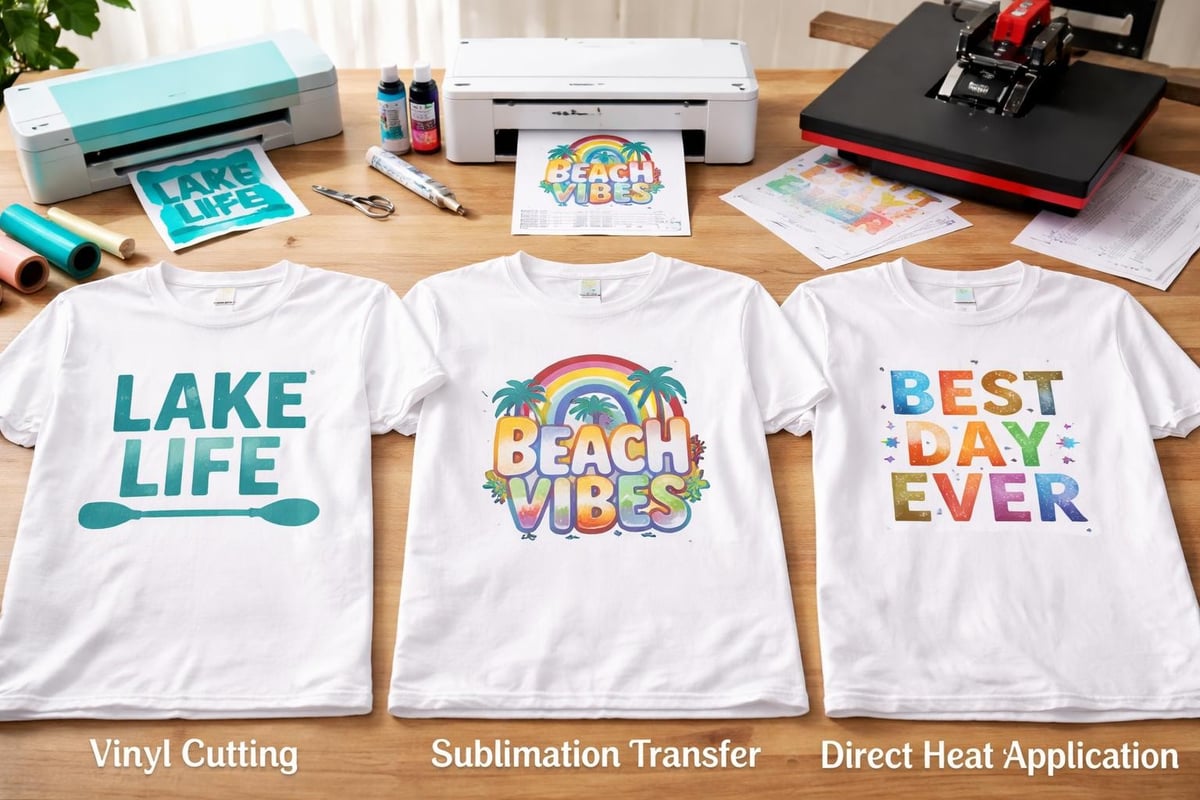
Vinyl heat transfer involves cutting designs from sheets of colored vinyl using a plotter or cutter, then heat-pressing the vinyl onto the garment. This method works exceptionally well for text, logos, and simple graphics with solid colors. The vinyl creates a slightly raised, durable design that withstands washing and maintains its appearance over time.
Vinyl heat transfer is ideal for:
- Team names and numbers on athletic wear
- Single-color logos and text designs
- Durable applications requiring flexibility
- Small quantities or individual customization
- Quick turnaround projects
Sublimation Printing
Sublimation printing uses heat to transfer dye directly into polyester fabric fibers, creating permanent, full-color designs that won't crack, peel, or fade. The process converts solid dye into gas without becoming liquid, allowing it to permeate the fabric. This technique produces vibrant, photographic-quality prints across the entire garment, making it popular for athletic wear, all-over prints, and promotional items.
The technology only works on white or light-colored polyester fabrics, as the dye becomes part of the material itself. According to comprehensive guides on types of shirt printing methods, sublimation continues to gain popularity for creating eye-catching, durable designs on performance wear.
Direct-to-Film (DTF) Transfer
DTF represents one of the newest shirt printing options, combining digital printing advantages with heat transfer application. The process prints designs onto a special film with adhesive powder, which is then heat-pressed onto the garment. DTF works on various fabric types, including cotton, polyester, and blends, offering greater versatility than traditional sublimation.
This method bridges the gap between DTG and screen printing, providing:
- Compatibility with all fabric colors and types
- Vibrant, durable prints with excellent washability
- No pre-treatment required
- Efficient production for small to medium runs
- Soft hand feel comparable to DTG
Businesses exploring DTF transfer options find this technology particularly valuable for mixed-fabric orders and designs requiring flexibility across different garment types.
Embroidery for Premium Professional Appearance
While technically not a printing method, embroidery deserves discussion among shirt printing options due to its popularity for professional apparel and promotional items. This technique uses specialized machines to stitch designs directly into fabric with colored threads, creating a textured, dimensional appearance that conveys quality and permanence.
Applications and Advantages
Embroidery excels for corporate logos, uniforms, polo shirts, hats, and bags. The raised, textured design communicates professionalism and durability that printed methods cannot replicate. Embroidered items typically command higher prices and perceived value, making them ideal for executive gifts, premium promotional products, and formal business attire.
The custom embroidery services game-changers include modern digitization technology that converts artwork into stitch patterns, multi-head machines that produce multiple items simultaneously, and expanded thread color options that achieve accurate brand matching.
Design Considerations
Embroidery works best with designs containing clear, simple elements without excessive fine detail. Small text and thin lines may not reproduce well, as thread thickness limits the minimum readable size. The stitch count directly impacts cost, making simple logos more economical than complex, detailed artwork.
| Design Element | Embroidery Suitability | Notes |
|---|---|---|
| Simple logos | Excellent | Clean, professional appearance |
| Text over 0.25" | Good | Readable and durable |
| Text under 0.25" | Poor | May be illegible |
| Photographs | Not suitable | Lacks necessary detail |
| Gradients | Limited | Requires special techniques |
Specialty Printing Techniques for Unique Effects
Beyond the primary shirt printing options, specialty techniques create unique visual and tactile effects that help designs stand out. These methods often combine with traditional printing or work as standalone applications for specific design elements.
Discharge Printing
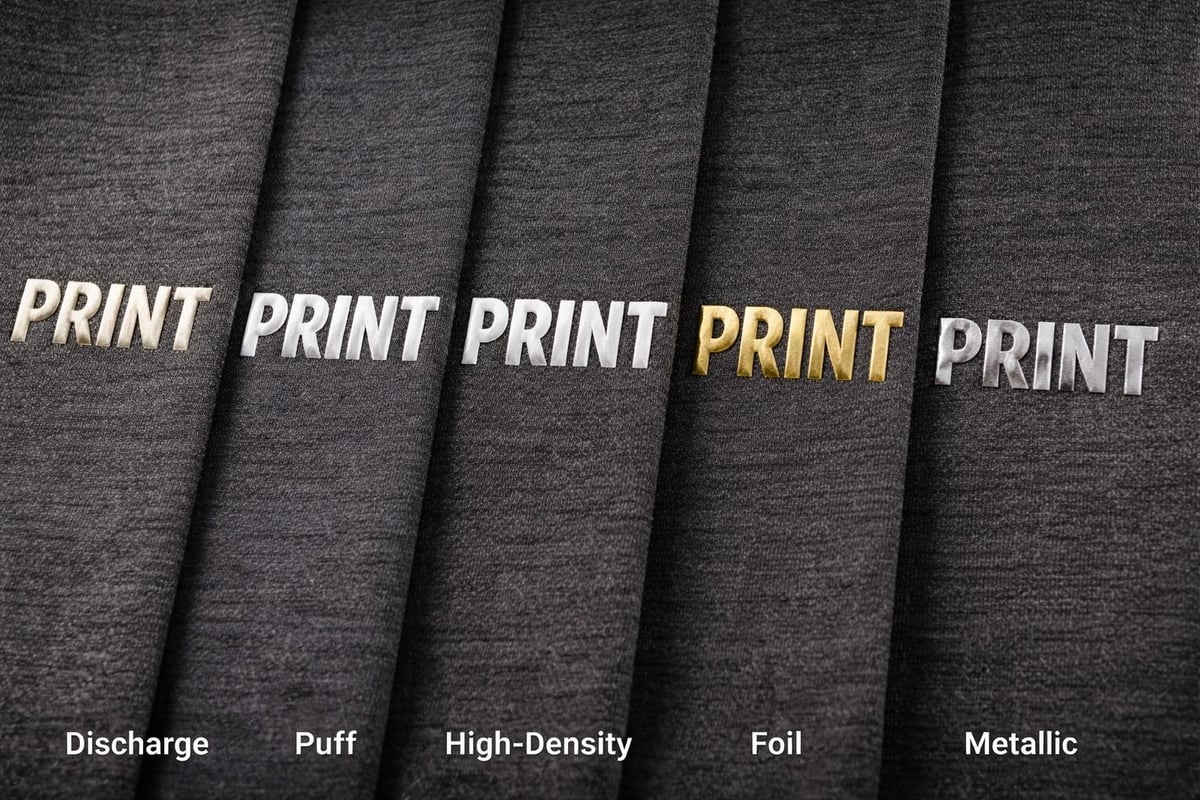
Discharge printing removes the garment's dye rather than adding ink on top, creating soft, breathable prints that feel like part of the fabric. The technique works exclusively on dark, dye-reactive fabrics, producing a vintage, worn-in appearance. When exploring different types of printing on t-shirts, discharge printing stands out for its unique ability to create light designs on dark fabrics without the heavy hand feel of traditional plastisol inks.
Puff and High-Density Printing
Puff printing adds a three-dimensional, raised effect to designs using special expanding inks. When heated, these inks rise above the fabric surface, creating texture and visual interest. High-density printing uses thicker ink deposits to achieve a similar raised effect without the expansion process, ideal for creating bold, tactile designs.
Foil and Metallic Applications
Foil printing applies reflective, metallic finishes to designs using heat-activated adhesive and metallic foil sheets. This technique creates eye-catching, premium-looking designs perfect for fashion brands, special events, and promotional items requiring luxury appeal. Metallic inks offer similar visual impact through screen printing, providing shimmer and shine without the additional foil application step.
Selecting the Right Printing Method
Choosing among shirt printing options requires evaluating multiple factors specific to your project. No single method works best for all situations, making it essential to match the technique to your specific requirements and constraints.
Critical Decision Factors
Order quantity significantly impacts method selection. Screen printing becomes cost-effective at quantities above 24 units, while DTG and heat transfer methods work better for smaller runs. Consider your current order size and future growth plans when investing in specific printing capabilities.
Design complexity guides technology choice. Simple logos with few colors suit screen printing perfectly, while detailed photographs or designs with color gradients require DTG or sublimation. Analyze your typical design characteristics to determine which methods you'll need most frequently.
Fabric type restricts certain options. Cotton works with all methods, while polyester requires sublimation or appropriate heat transfer for best results. Blended fabrics may limit certain techniques or require testing to ensure proper adhesion and durability.
Budget constraints influence feasible options. Initial setup costs for screen printing only make sense for larger quantities, while per-unit costs for digital methods remain consistent regardless of volume. Calculate total project costs rather than focusing solely on per-piece pricing.
Resources like the comprehensive guide to t-shirt printing methods provide decision matrices helping match requirements to optimal techniques.
Testing and Quality Control
Before committing to large production runs, request samples demonstrating the printing method you're considering. Examine print quality, color accuracy, and hand feel. Wash the sample several times to evaluate durability and color retention. Quality varies significantly between providers using the same technique, making sample evaluation crucial.
Production Timeline and Turnaround Considerations
Understanding production timelines helps set realistic expectations and plan projects appropriately. Different shirt printing options require varying setup times, production speeds, and curing periods that affect overall turnaround.
Standard Production Timeframes
Screen printing typically requires 7-10 business days from artwork approval to delivery, including screen preparation, printing, and curing time. Rush services may reduce this to 3-5 days with additional fees. DTG printing often offers faster turnaround of 2-5 business days due to minimal setup requirements. Embroidery falls between these ranges at 5-7 business days, depending on design complexity and quantity.
Factors affecting production speed:
- Design complexity and required color separations
- Garment availability and supplier stock levels
- Order volume and current production queue
- Specialty processes requiring additional steps
- Quality control and inspection procedures
When seeking quick shirt printing services, discuss specific timeline needs upfront and understand which methods can accommodate rush orders without compromising quality.
Maintaining Print Quality and Longevity
Proper care extends the life of printed shirts regardless of the method used. Each technique has specific care requirements that maximize durability and appearance retention.
Care Instructions by Method
Screen-printed garments should be washed inside-out in cold water and tumble-dried on low heat. Avoid bleach and harsh detergents that may fade colors prematurely. DTG prints require similar care, with the addition of avoiding direct ironing on printed areas. Embroidered items are generally more durable but benefit from inside-out washing to prevent snagging.
Sublimated garments maintain their appearance best when washed in cold water and air-dried, as high heat may affect color vibrancy over time. Vinyl transfers last longest when washed inside-out and dried on low heat settings, avoiding direct heat contact with the vinyl surface.
Storage and Handling
Store printed shirts folded rather than hung to prevent stretching at the shoulders. Avoid storing in direct sunlight, which may fade colors regardless of printing method. When stacking printed shirts, place tissue paper between items to prevent ink transfer or friction damage during storage.
Cost Analysis and Budget Planning
Understanding the cost structure of various shirt printing options helps you budget appropriately and select methods aligned with your financial constraints. Costs vary based on quantity, complexity, and production method.
Breaking Down Pricing Components
Screen printing costs include setup fees ($15-50 per color), screen creation ($20-40 per screen), and per-unit printing charges ($3-8 depending on quantity and colors). The setup costs are one-time charges per design, making large orders more economical as these costs spread across more units.
DTG printing typically charges $8-15 per shirt with no setup fees, making small quantities cost-effective. Embroidery pricing depends on stitch count, ranging from $5-20 per item based on design complexity. Heat transfer methods fall between $6-12 per unit, varying by transfer type and size.
| Printing Method | Setup Cost | Unit Cost (24+) | Unit Cost (1-23) | Best Value At |
|---|---|---|---|---|
| Screen Printing | $50-200 | $3-6 | $12-20 | 50+ units |
| DTG | $0 | $8-12 | $8-12 | 1-50 units |
| Embroidery | $25-75 | $7-15 | $10-20 | 12+ units |
| Heat Transfer | $0-50 | $6-10 | $8-12 | 1-100 units |
When evaluating best printing methods for shirts, consider total project cost including setup, production, and potential reorder scenarios.
Environmental and Sustainability Considerations
Modern shirt printing options increasingly address environmental concerns through improved materials, processes, and waste reduction. Understanding the environmental impact of different methods helps businesses make responsible choices aligned with sustainability goals.
Eco-Friendly Printing Approaches
Water-based inks used in screen printing and DTG produce less environmental impact than traditional plastisol inks, containing fewer harmful chemicals and requiring less energy for curing. These inks break down more readily and don't release toxic byproducts during disposal. Many providers now offer organic cotton garments and eco-friendly ink options that reduce overall environmental footprint.
DTG printing generates minimal waste compared to screen printing, as it doesn't require screen preparation, cleanup solvents, or excess ink disposal. The digital nature of the process allows precise ink application, reducing material waste. Embroidery produces virtually no chemical waste, though thread waste and backing material disposal require consideration.
Sustainable Material Choices
Choosing organic cotton, recycled polyester, or bamboo-blend fabrics amplifies the environmental benefits of eco-friendly printing methods. These sustainable materials combine with low-impact printing to create truly environmentally responsible custom apparel. Discussing custom logo printing trends reveals growing consumer demand for sustainable production practices.
Industry Applications and Use Cases
Different shirt printing options serve specific industries and applications better than others. Understanding these alignments helps businesses select methods that meet their unique requirements and customer expectations.
Corporate and Business Apparel
Corporations favor embroidery and high-quality screen printing for uniforms, polo shirts, and executive apparel. The professional appearance and durability of these methods align with corporate brand standards. Small businesses and startups often choose DTG for smaller initial orders, transitioning to screen printing as volume increases.
Fashion and Retail Brands
Fashion brands leverage DTG and sublimation for limited-edition designs, allowing rapid trend response without large inventory commitments. Screen printing remains popular for established designs with consistent demand, offering cost-effective production at scale. Specialty techniques like discharge and foil printing help fashion brands create unique products that stand out in competitive markets.
Events and Promotional Products
Event organizers rely on quick-turnaround methods like DTG and heat transfer for time-sensitive orders. The ability to produce custom designs rapidly without large minimums makes these techniques ideal for conferences, fundraisers, and seasonal events. Screen printing serves large events and annual recurring occasions where volume justifies setup costs.
Athletic and Performance Wear
Sublimation dominates the athletic wear segment due to its ability to create vibrant, full-coverage designs that won't crack or peel during intense activity. The breathable, permanent nature of sublimated prints suits performance requirements. Embroidery adds team logos and player identification to jerseys and warm-up apparel.
Technology Advances Shaping the Future
The custom printing industry continues evolving with technological innovations expanding shirt printing options and improving existing methods. Staying informed about these advances helps businesses remain competitive and meet changing customer expectations.
Automation and Efficiency Improvements
Automated screen printing presses increase production speed and consistency, reducing labor costs and human error. DTG printers now feature faster print speeds, improved ink formulations, and better color management systems. Digital embroidery machines with automatic thread changes and pattern optimization reduce production time while maintaining quality.
Software and Design Integration
Advanced design software now integrates directly with printing equipment, streamlining the process from concept to production. Color matching technology ensures accurate brand color reproduction across different printing methods. Online design tools empower customers to create and approve designs remotely, reducing revision cycles and speeding project completion.
According to comprehensive analyses of printing methods for t-shirts, hybrid approaches combining multiple techniques on single garments are becoming more accessible, allowing creative designs previously impossible or prohibitively expensive.
Selecting the right shirt printing method requires balancing multiple factors including order size, design complexity, budget, timeline, and quality expectations. Each technique offers distinct advantages that make it ideal for specific applications, from screen printing's cost-effectiveness for large orders to DTG's flexibility for complex designs and small quantities. Whether you need vibrant promotional items, professional corporate apparel, or unique fashion pieces, Custom 101 Prints provides expert guidance and comprehensive printing services to bring your vision to life. With no minimum order requirements and fast turnaround times, their experienced team helps New York businesses and individuals choose the perfect printing solution for every project.