Master Promotional Product Marketing
Promotional products are tangible branded items distributed to customers, partners, or employees to increase visibility, drive recall, and support marketing objectives. This guide explains what promotional products are, how they function as a form of branded merchandise, and why an evidence-based promotional product strategy can deliver measurable ROI for business branding. Many organizations struggle to choose the right promo items and to integrate them into campaigns so that impressions translate into conversions; this article shows how to define goals, select items, design effectively, measure outcomes, and adapt to 2025 trends. You will learn which product categories drive the most impressions and long-term recognition, the practical steps to create a promotional product strategy, printing and personalization best practices, KPI formulas to track performance, and emerging trends such as sustainability and advanced personalization. Throughout, semantic relationships between product types, printing methods, and campaign channels are made explicit to help you map promotional product choices to business outcomes.
What Are Promotional Products and Why Are They Essential for Business Marketing?
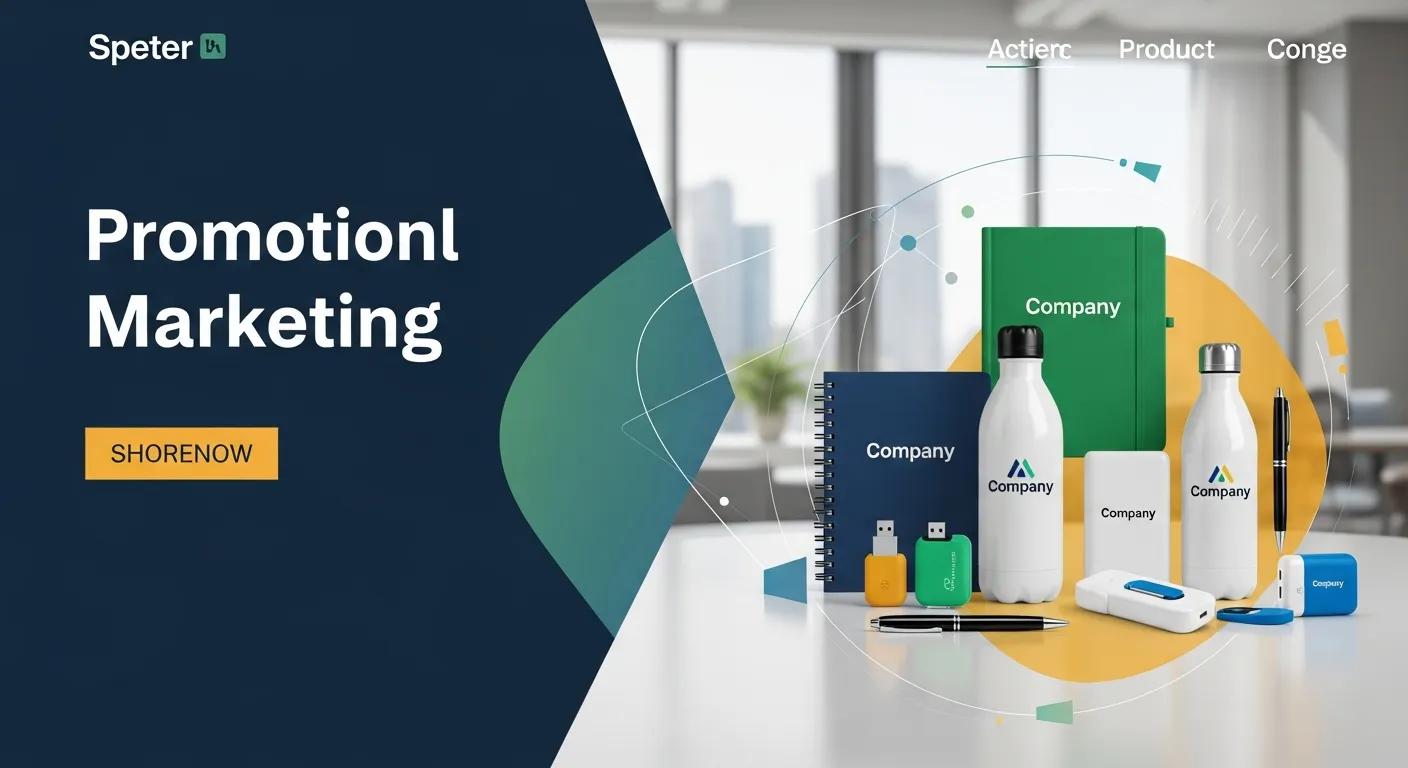
Promotional products are physical items—such as apparel, drinkware, tech gadgets, and bags—branded with a company logo or message to create ongoing impressions that extend beyond a single campaign. They work by combining utility and repeated exposure: when recipients use branded merchandise, each use serves as an impression that strengthens brand recognition and fosters positive associations. The specific benefit is measurable uplift in recall and engagement because promotional products create both functional value and emotional goodwill, which supports customer loyalty and word-of-mouth promotion. Understanding these mechanisms allows marketers to choose items that match campaign goals and audience behaviors, rather than selecting merchandise based only on price.
Academic research further underscores the importance of well-executed promotional strategies in enhancing brand recognition and driving profitability.
Promotional Strategies for Brand Recognition & Profitability
The main focus behind this research is to assist the company increase the level of consumer’s brand identification for their company and products through various forms of marketing, advertising, and promotional strategies. It is in the best interest of the company to analyze the data collected and offer insight that will not only increase the level of brand identification, but inadvertently increase the profitability of their company.
Analysis Of Function Drink Brand Recognition, 2010
Promotional products deliver results via three core mechanisms: repeated exposure, functional usefulness, and perceived value. Repeated exposure increases recognition over time, functional usefulness ensures regular interaction with the brand, and perceived value raises positive sentiment and willingness to recommend. Together, those mechanisms influence both acquisition and retention outcomes, making promotional merchandise a cost-effective complement to digital and experiential marketing channels.
Promotional products are particularly effective for building physical presence at trade shows, reinforcing onboarding programs for customers and employees, and enhancing direct-mail packages. The next section breaks down the empirical evidence and statistics that demonstrate promotional product effectiveness and how marketers can interpret those figures for planning.
How Do Promotional Products Enhance Brand Recognition and Customer Loyalty?
Promotional products enhance brand recognition primarily through repeated, context-rich exposure: when users wear branded apparel or use branded drinkware, they create visible impressions that other people observe and remember. This mechanism links the brand to daily routines and social contexts, increasing memorability and the likelihood of future engagement. The perceived value of a useful item elevates the recipient’s attitude toward the brand, strengthening loyalty and prompting referrals when the product meets or exceeds expectations. Measuring these effects requires tracking distribution channels, estimated impressions, and follow-up behaviors that indicate increased engagement or repeat purchases.
Brands should match product utility to audience habits to maximize both recognition and loyalty, for example prioritizing wearable items for consumer-facing events and tech accessories for professional audiences. This targeting increases the probability that impressions translate into measurable business outcomes and sets the stage for calculating cost-per-impression (CPI) and conversion lift in campaign reporting.
What Are the Key Statistics Demonstrating Promotional Product Effectiveness?
Recent industry analysis shows that promotional products remain a significant marketing channel with strong brand recall and long lifespans, and marketers can translate those metrics into campaign-level KPIs. Key figures include industry valuation, high brand-recall percentages for useful items, and typical impressions-per-item ranges that help estimate reach and CPI. Interpreting these numbers helps marketers prioritize product categories based on budget and desired lifetime impressions rather than short-term novelty.
When planning, convert impressions into financial metrics: estimate impressions per distributed item, multiply by distribution volume, and divide campaign cost to derive CPI; then map CPI to expected conversion rates for realistic ROI forecasting. Understanding these statistics and how to apply them enables marketers to design campaigns that balance cost, visibility, and conversion potential.
Which Types of Custom Business Promotional Products Drive the Best Branding Results?
Choosing the right product category depends on desired lifetime impressions, utility, and context of use; high-impression items like bags and drinkware tend to deliver broad exposure, while wearable apparel increases repeated visibility over time. The best branding results arise when product selection aligns with audience behavior: durable everyday items produce steady impressions, event-specific apparel amplifies on-site visibility, and premium tech items deliver perceived value that supports lead capture and follow-up. Selecting items through this framework increases the likelihood that promotional products move prospects down the funnel rather than merely generating short-term attention.
Below is a comparison table that summarizes typical metrics and best-use scenarios for common promotional categories to help prioritize selection during planning.
Different promotional product categories vary widely in impressions, lifespan, and campaign fit.
| Product Category | Typical Strength | Best Use Scenario |
|---|---|---|
| Branded Tote Bag | High impressions, long lifespan | Trade shows, retail giveaways |
| Promotional Drinkware | Frequent daily use, very high impressions | Events, employee programs |
| Custom Apparel (T-shirts, Hoodies) | High visibility, social exposure | Team uniforms, event swag |
| Tech Gadgets (power banks, USB) | High perceived value, targeted use | Lead magnets, VIP gifting |
This comparison helps marketers weigh the tradeoffs between cost, reach, and perceived value when building a product mix for a campaign. Next we look at how apparel and drinkware specifically affect visibility and brand recall.
How Does Custom Apparel Like T-Shirts, Hats, and Hoodies Boost Brand Visibility?

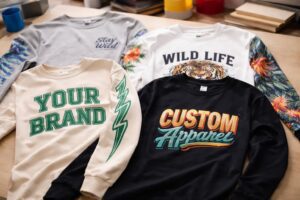
Custom apparel functions as wearable advertising and can create concentrated bursts of visibility at events and persistent impressions in everyday settings. The mechanism is social diffusion: apparel worn by staff or enthusiastic customers becomes a mobile billboard that generates secondary impressions through social interaction and photos shared online. Quality matters because durable fabrics and clean printing extend garment life and thus increase lifetime impressions; poor quality shortens that timeline and reduces cost-effectiveness. When brands invest in appealing design and comfortable materials, they maximize wearability and the brand’s chance to be seen in multiple contexts.
To optimize outcomes, specify fabric choices and printing methods aligned with intended use—lightweight blends for event tees, heavier fabrics for long-lasting hoodies—and include clear, legible logo placement that reads from a distance. These choices translate directly into increased visibility and better cost-per-impression metrics for apparel campaigns.
What Are the Benefits of Promotional Drinkware, Tech Gadgets, and Eco-Friendly Items?
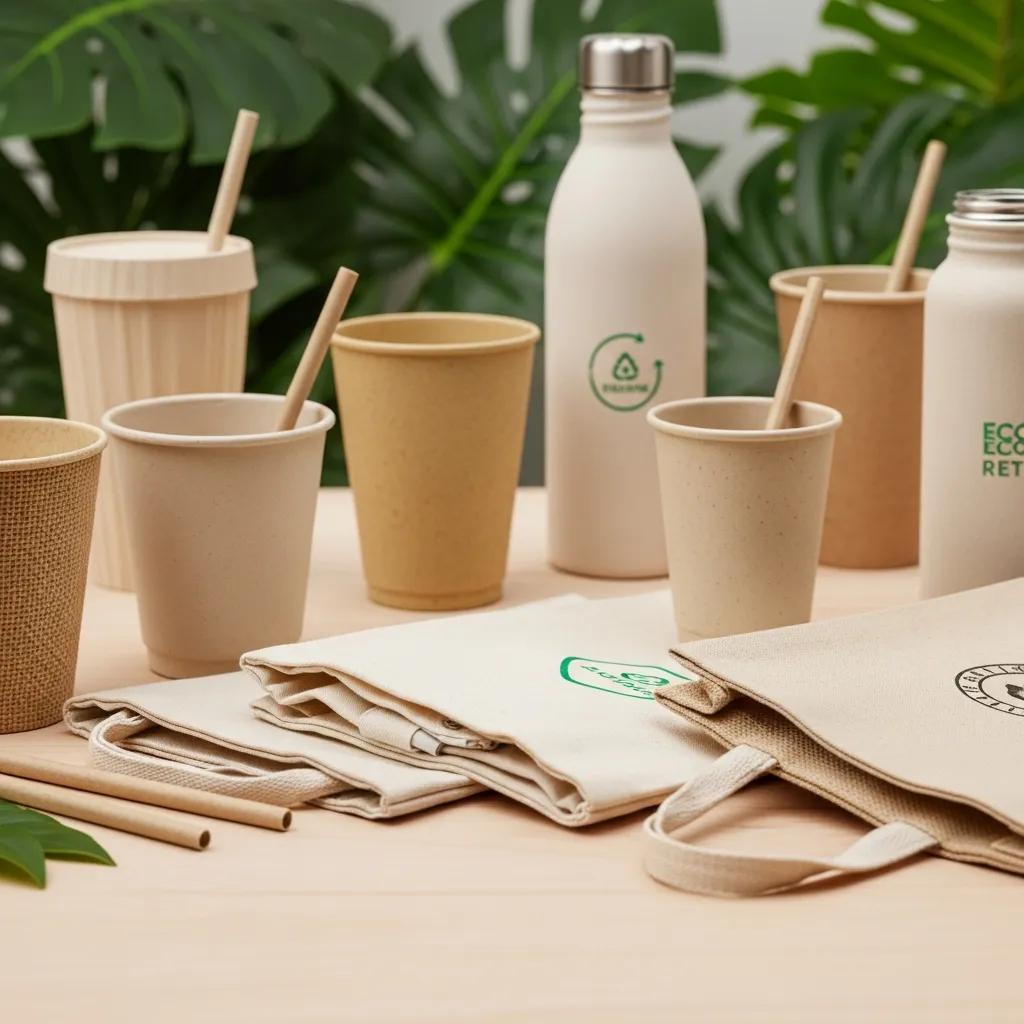
Drinkware often records among the highest impressions per item because bottles and mugs enter daily routines, producing recurrent brand exposures over months or years. Tech gadgets such as power banks or USB drives offer strong perceived value and can accelerate lead capture when combined with QR-enabled packaging or onboarding prompts. Eco-friendly items align with corporate sustainability goals and resonate with audiences prioritizing environmental responsibility, increasing positive brand associations and purchase intent. Each category serves different strategic aims: drinkware for mass impressions, tech for premium engagement, and sustainable goods for brand alignment with ESG messaging.
Choosing the right combination depends on campaign goals: for broad awareness, prioritize drinkware and bags; for targeted lead generation, include higher-value tech items; for employee-brand alignment, choose sustainable apparel and office items. This mix maximizes both reach and resonance across audience segments.
- The next section provides a step-by-step approach to developing a promotional product strategy that maps items to goals and KPIs.
How Can Businesses Develop an Effective Promotional Product Strategy?
An effective promotional product strategy begins by defining audience segments and campaign objectives, then mapping product attributes—utility, lifespan, and perceived value—to those objectives. This approach ensures that selection decisions are driven by expected impressions, conversion pathways, and logistical constraints such as budget and turnaround. Good strategy links promotional products to channels and metrics: which items will go to trade-show attendees, which to direct-mail recipients, and which to employee onboarding programs; each distribution path needs a tracking mechanism like promo codes or dedicated landing pages. A deliberate roadmap prevents scattershot giveaways and lets marketers calculate CPI and expected conversion uplift in advance.
To operationalize this framework, businesses should create a plan that integrates procurement, personalization, distribution timing, and measurement tactics. Implementation requires collaboration across marketing, procurement, and fulfillment to ensure on-time delivery and quality control. In practice, selection and production choices (such as printing method and order minimums) affect timelines and costs; service providers that offer multiple printing methods and account support can simplify implementation while reducing administrative burden.
Here are practical strategic steps that form a replicable checklist for campaign design:
- Define Objectives: Specify awareness, lead generation, retention, or employee engagement targets.
- Select Audience and Channel: Choose who receives items and through which distribution method.
- Match Product to Goal: Prioritize items by impressions, lifespan, and perceived value for the objective.
- Plan Measurement: Assign promo codes, landing pages, or QR codes to track behavior.
- Confirm Logistics: Budget, turnaround time, personalization needs, and fulfillment options.
This structured process ensures product choices are purposeful and measurable and leads directly into selection criteria and integration tactics for campaign execution.
What Factors Should You Consider When Choosing the Right Promotional Product?
Choosing the right promotional product requires evaluating audience relevance, utility, budget constraints, expected lifespan, and brand fit; each factor influences the item’s ability to deliver impressions and conversions. Audience relevance ensures the item will be used; utility drives frequency of exposure; budget determines scale; lifespan dictates long-term impressions; and brand fit maintains message coherence. Trade-offs are common—higher perceived-value items cost more per unit but can increase conversion rates, while low-cost items scale to large audiences but may generate limited long-term engagement. Marketers should model scenarios for CPI and conversion lift to determine the optimal mix given campaign goals.
To decide quickly, create a matrix scoring candidate items on those five dimensions and choose items with the best combined score for your objective. This scoring approach streamlines procurement and reduces the risk of mismatches between item selection and campaign intent.
How Do You Integrate Promotional Products into Marketing Campaigns for Maximum ROI?
Integration requires connecting physical items to measurable digital actions: use unique promo codes, dedicated landing pages, QR codes, or UTM-tagged URLs to track responses and attribute conversions to product distributions. At trade shows, combine badge-scanned leads with a merch pickup that includes a personalized follow-up email; in direct mail, include a redemption code tied to a landing page; for employee gifting, pair items with internal engagement surveys to measure morale impact. These tactics convert impressions into traceable interactions that feed KPI calculations. Integrating personalization—such as variable names or role-specific designs—increases relevance and improves conversion probabilities but also affects production complexity and lead times.
When choosing a vendor or supplier, confirm they can support variable-data printing, fulfillment, and integration with your CRM or marketing automation platform. Providers that offer account management and multiple production methods reduce friction during implementation and help ensure campaigns meet deadlines.
What Are the Best Practices for Designing and Customizing Promotional Products?
Design and customization decisions determine whether a promotional product becomes a long-lived asset or a quickly discarded novelty; best practices focus on visibility, legibility, material suitability, and alignment with brand identity. Effective design places logos and messaging where they are most visible during typical use, maintains high color contrast for readability, and avoids overly small type that disappears with wear. Material selection and printing method must match the item’s intended function—durable inks and stitching for apparel, long-wear engraving for metal items, and scratch-resistant coatings for tech accessories. Attention to these details delivers higher impressions per item and preserves perceived value over time.
Design choices should also account for personalization options and production constraints: variable names, multi-color logos, and small-run customizations can increase engagement but may require specific printing methods and longer lead times. Considering these trade-offs up front helps align creative ambitions with budget and schedule realities.
Below is a concise design checklist to guide creative decisions and ensure that every branded item supports visibility and longevity.
A practical checklist helps designers and marketers make consistent choices across product categories.
- Prioritize logo placement for typical usage angles and contexts.
- Ensure color contrast and font legibility at expected viewing distances.
- Select materials that match the intended lifespan and usage environment.
- Confirm printing processes are compatible with artwork complexity and order size.
- Factor in personalization options and their impact on turnaround time.
Using this checklist reduces costly reprints and increases the probability that an item will be used repeatedly, thereby boosting impressions and ROI. Next, we compare common printing methods and how they map to quality, cost, and recommended applications.
Before the technical comparison, note that specialized vendors provide a range of methods and support: for example, suppliers offering screen printing, custom embroidery, direct-to-garment, direct-to-film, and laser engraving—as well as rush options and account management—can help implement complex programs more smoothly.
How Do Different Printing Methods Like Screen Printing and Embroidery Affect Product Quality?
Printing and decoration methods each have distinct strengths: screen printing is cost-effective for large runs with durable, vibrant prints; embroidery adds texture and perceived premium quality ideal for hats and polos; direct-to-garment (DTG) excels for detailed, full-color designs on small to medium runs; direct-to-film (DTF) combines color fidelity with flexibility across substrates; and laser engraving provides permanent, high-end branding on metal and rigid surfaces. Method choice affects durability, visual outcome, cost-per-unit, minimum order quantities, and turnaround times. Understanding these trade-offs helps marketers select the most appropriate approach for both creative goals and logistical constraints.
When specifying art files, prepare vector logos for screen printing and high-resolution PNGs for DTG/DTF to ensure crisp reproduction. Also, consult production samples early in the design phase to validate color, placement, and material compatibility before full production.
Here is a compact reference table mapping common printing methods to their recommended use cases and characteristics.
A quick reference clarifies which printing method fits typical product and order scenarios.
| Printing Method | Best For | Typical Strength |
|---|---|---|
| Screen Printing | Large, simple-color apparel runs | Cost-effective, durable |
| Embroidery | Hats, polos, patches | Premium texture, long-lasting |
| Direct-to-Garment (DTG) | Small/medium full-color prints | High detail, low setup |
| Direct-to-Film (DTF) | Versatile substrates, multi-color | Flexible adhesion, color fidelity |
| Laser Engraving | Metal, wood, rigid items | Permanent, high-end finish |
This table helps match production methods to campaign needs, and it highlights how method choice influences cost and turnaround. The next subsection discusses personalization types and their marketing benefits.
What Personalization Options Enhance Customer Engagement and Brand Impact?
Personalization options include variable-data printing (names, IDs), color or SKU variants tailored to audience segments, and role-specific or event-specific artwork that increases relevance. Personalization raises perceived value and drives higher engagement and retention because recipients see the item as designed for them rather than as generic swag. However, personalization increases per-unit costs and can extend lead times depending on the method and whether fulfillment and kitting are required. For campaigns prioritizing long-term relationships—employee recognition or VIP programs—personalization often justifies the added expense by improving conversion and loyalty metrics.
Operationally, balance personalization benefits with budget and timing: reserve individualized items for high-value recipients and use generalized branded items for mass distribution. When working with suppliers, confirm their ability to handle variable-data runs and to provide fulfillment services that include addressing, kitting, and segmentation.
How Do You Measure the Success and ROI of Promotional Product Marketing?
Measuring promotional product success requires translating impressions and distribution volumes into meaningful KPIs suchs as cost-per-impression (CPI), conversion rate, uplift in retention, and net-new revenue attributed to campaigns. Use tracking mechanisms—unique promo codes, dedicated landing pages, QR codes with UTM parameters, or campaign-specific phone numbers—to attribute conversions reliably. Calculating ROI begins with total campaign cost (procurement, design, fulfillment) and mapping outcomes (sales, leads, retention) that can be directly tied to those distributions. Structured measurement lets marketers compare promotional product strategies to other channels and optimize allocation across product types and audiences.
A short KPI table below provides formulas and suggested metrics for common campaign types, helping teams standardize measurement and reporting.
| Campaign Type | KPI | Suggested Metric / Formula |
|---|---|---|
| Trade Show | Cost-per-Lead (CPL) | CPL = (Total Trade Show Promo Cost) / (Leads Attributed) |
| Direct Mail | Conversion Rate | Conversions / Recipients × 100 |
| Employee Gifting | Retention Uplift | (Retention post-gift − Baseline) / Baseline × 100 |
| Digital Redemption | CPI & Conversion | CPI = Cost / (Estimated Impressions); Conversion Rate tracked via codes |
This KPI mapping helps teams prioritize which metrics to track for each distribution channel and to calculate a consistent ROI across initiatives. With measurement in place, case studies become a reliable way to demonstrate impact to stakeholders.
Which Key Performance Indicators Track Promotional Product Effectiveness?
Primary KPIs include impressions per item, CPI, conversion rate of recipients, lead quality, and retention uplift for existing customers or employees. Impressions per item estimate how many times the brand will be seen over the product’s lifespan; CPI divides total campaign cost by estimated impressions to compare channels; conversion rate ties item distribution to measurable actions such as form fills or purchases using assigned codes. Setting benchmark targets—such as a target CPI range or minimum conversion rate—enables objective campaign evaluation and informs future allocation. Clear KPI definitions and consistent attribution rules are essential to avoid overstating promotional product impact.
To operationalize KPIs, create a dashboard that aggregates distribution counts, tracking-code redemptions, landing page analytics, and downstream revenue attribution. Regularly review these metrics to refine product choices, personalization levels, and distribution strategies.
How Can Case Studies Demonstrate the Impact of Promotional Products on Business Growth?
Case studies should follow a simple structure—goal, intervention, metrics tracked, and outcome—with transparent attribution methods to show how promotional products influenced results. Include baseline performance measures, the distribution strategy used, tracking mechanisms, and a clear summary of outcomes such as leads generated, conversion rates, and revenue attributed to the campaign. While anonymized examples help make the method relatable, maintain data integrity by reporting the exact KPIs and timeframes used for measurement. Well-structured case studies help internal stakeholders understand the causal link between promotional product investments and business outcomes.
When documenting outcomes, include both quantitative metrics and qualitative insights such as customer feedback or observed behavioral changes; these combined signals strengthen the case for continued investment and inform future campaign design.
For teams ready to act, partnering with a supplier that streamlines production, offers multiple printing methods, dedicated account managers, wholesale pricing with no minimum order requirements, and predictable turnaround times simplifies execution. For instance, suppliers that guarantee a six-business-day turnaround with rush order options can enable rapid campaigns and last-minute event preparations while maintaining quality control.
What Are the Emerging Trends in Promotional Products for Business Marketing in 2025?
In 2025, promotional product selection is increasingly influenced by sustainability, advanced personalization, and tech integration that supports measurable digital follow-up. Sustainability drives procurement decisions as buyers prioritize recycled materials, low-impact manufacturing, and transparent supplier practices to meet corporate ESG goals. Personalization technologies—variable-data printing and on-demand production—allow marketers to deliver more relevant items at scale, improving engagement while reducing waste. Tech-enabled items and experiential gifting that tie physical goods to digital experiences (for example, QR-enhanced packaging that triggers onboarding content) will continue to rise in prominence as marketers seek traceable results.
Why Are Eco-Friendly and Sustainable Promotional Products Gaining Popularity?
Eco-friendly promotional products are rising in popularity due to increasing consumer preference for sustainable brands and corporate commitments to reduce environmental impact, making green merchandise both a values signal and a marketing differentiator. Sustainable items—such as recycled tote bags or biodegradable drinkware—tend to resonate with audiences who weigh environmental impact in purchasing decisions, which can improve brand sentiment and loyalty. Procurement teams should evaluate supplier transparency on material sourcing and manufacturing processes to verify sustainability claims and avoid greenwashing. Choosing sustainable items often requires balancing slightly higher unit costs against long-term brand benefits and alignment with corporate values.
To assess vendors, ask for material certifications, production waste metrics, and end-of-life disposal guidance to ensure items truly deliver on sustainability promises. Doing so reduces reputational risk and strengthens the brand-story around responsible marketing.
How Is Personalization Shaping the Future of Promotional Product Marketing?
Personalization is shifting promotional products from generic giveaways to targeted brand experiences by allowing marketers to tailor items to individual recipients, event types, or campaign segments. Variable-data printing and on-demand production enable names, role-specific messages, and localized artwork that increases relevance and perceived value, thereby improving engagement and conversion rates. However, personalization increases operational complexity, often requiring more advanced production workflows, higher per-unit costs, and longer lead times for fulfillment. Marketers must weigh these trade-offs and reserve personalized items for high-value recipients or campaigns with clear measurement frameworks.
As personalization technologies become more accessible, the strategic use of individualized merchandise—combined with measurable digital touchpoints—will be a key differentiator for campaigns that seek both emotional resonance and direct attribution.
For teams ready to design, produce, and distribute promotional products at scale, note that suppliers offering a combination of printing methods—screen printing, embroidery, direct-to-garment, direct-to-film, and laser engraving—plus dedicated account management, wholesale pricing with no minimum order, and a reliable six-business-day turnaround with rush options can significantly reduce execution risk and shorten time-to-campaign. Custom 101 Prints Inc. operates as an e-commerce and information hub that provides those core capabilities and can serve as an implementation partner for businesses that need rapid, affordable, and quality customization across apparel, bags, drinkware, and promotional accessories.
This guide has covered definition, product choices, strategy, design, measurement, and trends to equip you for effective promotional product marketing in 2025. If you are ready to take the next step, explore suppliers that match your production, personalization, and timeline needs and plan a small pilot to validate CPI and conversion assumptions against real campaign data.