Understanding shirt printing prices requires knowledge of multiple factors that influence the final cost of custom apparel. Whether you're ordering promotional shirts for your business, creating merchandise for an event, or launching a clothing line, knowing what drives pricing helps you make informed decisions and maximize your budget. The custom printing industry has evolved significantly, offering various methods and options that affect the bottom line. This comprehensive guide explores everything you need to know about shirt printing costs in 2026, from basic pricing structures to advanced considerations that impact your investment.
What Determines Shirt Printing Prices
The cost of custom shirt printing isn't a one-size-fits-all figure. Multiple variables work together to create the final price quote you receive from print shops.
Printing Method Selection
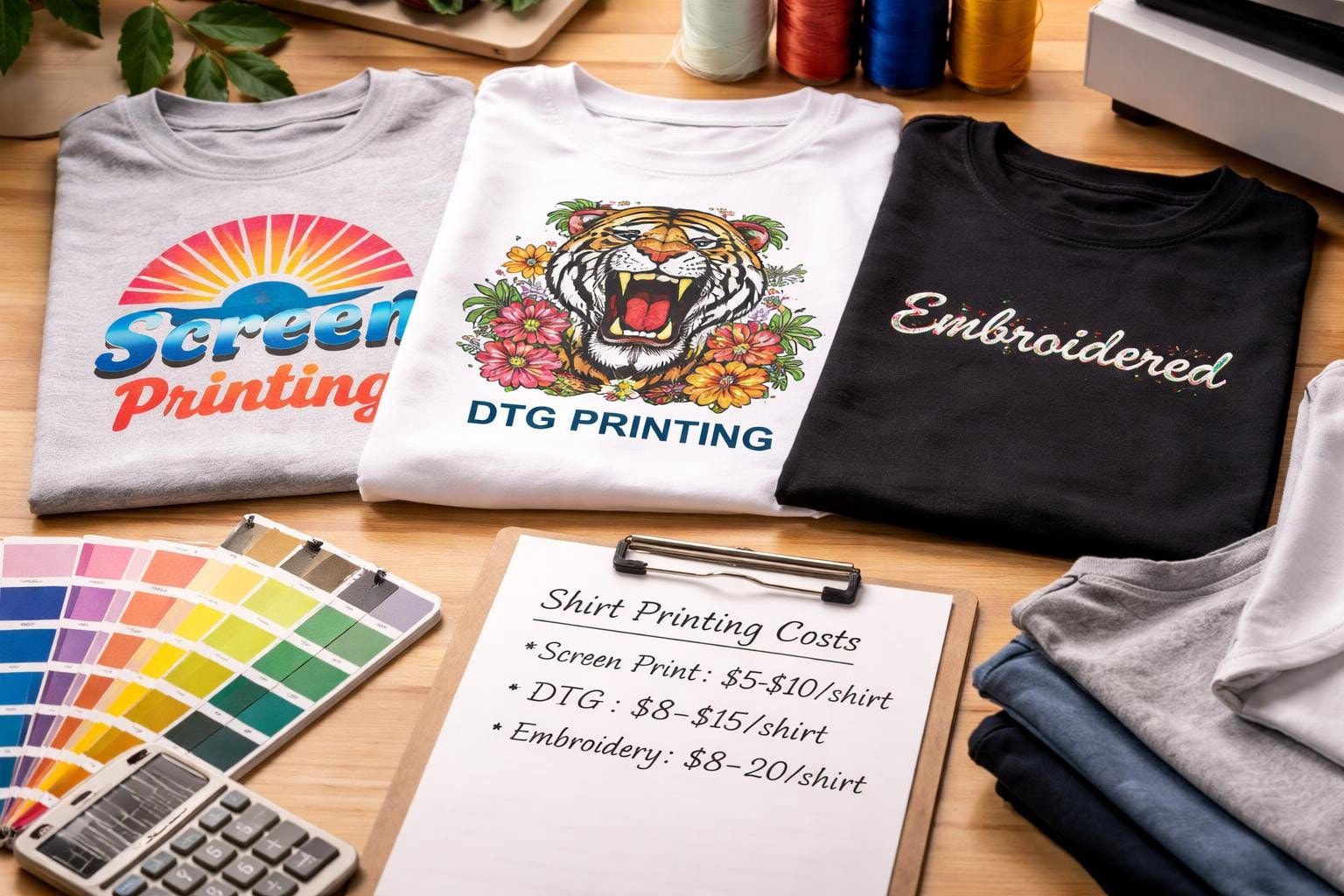
Different printing techniques come with distinct cost structures. Screen printing remains one of the most economical options for bulk orders, with setup costs that decrease per unit as quantities increase. Direct-to-garment (DTG) printing offers flexibility for smaller runs and complex designs, though per-shirt costs typically stay higher. DTG printing costs vary significantly based on garment color, with dark shirts requiring additional primer layers that increase expenses.
Heat transfer and vinyl applications provide another pricing tier, suitable for small batches or single items. Embroidery commands premium pricing due to its perceived value and durability, calculated by stitch count rather than design size alone.
Common Printing Method Price Ranges:
- Screen printing: $3-$15 per shirt (quantity dependent)
- Direct-to-garment: $8-$25 per shirt
- Heat transfer: $10-$30 per shirt
- Embroidery: $5-$20 per location (plus garment cost)
Order Quantity Impact
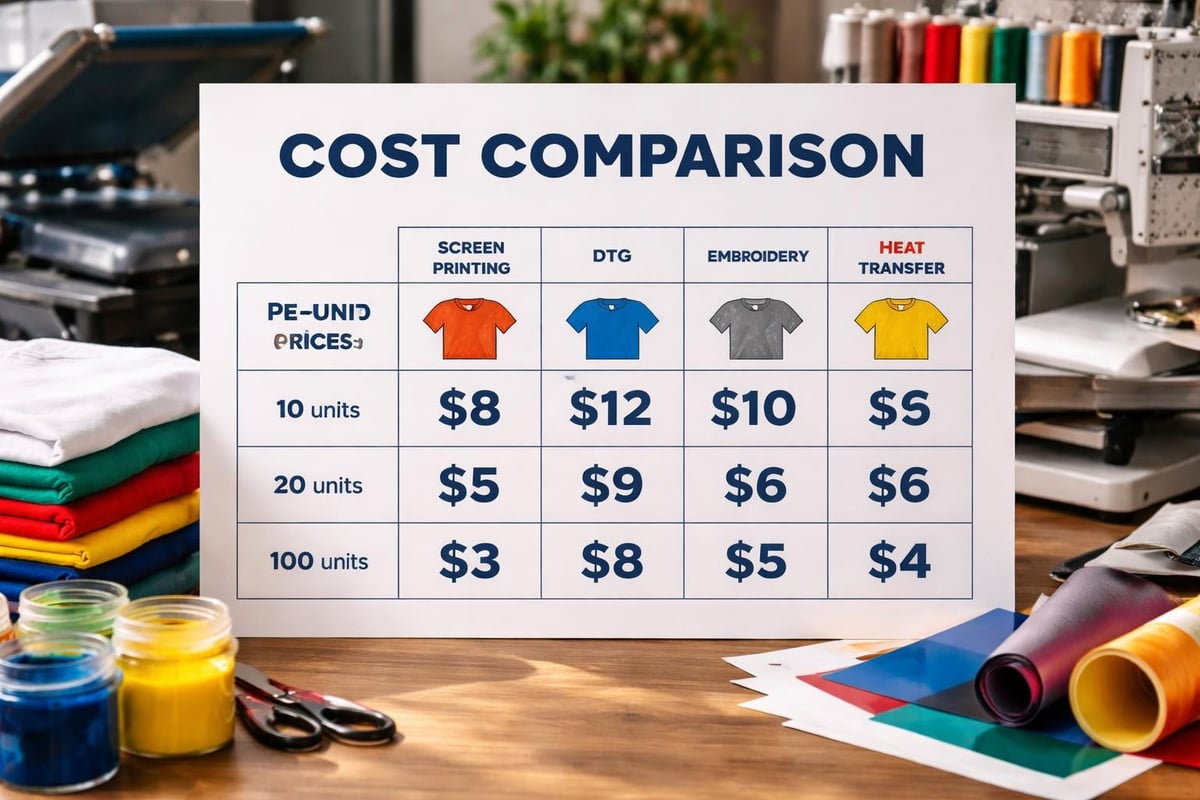
Volume significantly affects shirt printing prices. Most custom printing shops structure pricing on a tiered system where larger orders reduce the per-piece cost. This happens because setup costs (screens, digitizing, preparation) get distributed across more units.
| Order Quantity | Screen Print Price/Shirt | DTG Price/Shirt |
|---|---|---|
| 1-11 shirts | $15-$25 | $20-$30 |
| 12-24 shirts | $10-$15 | $15-$22 |
| 25-49 shirts | $7-$12 | $12-$18 |
| 50-99 shirts | $5-$9 | $10-$15 |
| 100+ shirts | $3-$7 | $8-$12 |
Understanding these thresholds helps you identify sweet spots where ordering slightly more shirts dramatically reduces per-unit costs. Companies like Custom 101 Prints offer no minimum order requirements, making custom printing accessible regardless of project size.
Garment Quality and Style Considerations
The blank shirt you choose forms the foundation of your total cost. Shirt printing prices reflect not just the printing process but the base garment quality and style.
Fabric and Brand Selection
Basic cotton tees represent the most affordable option, typically ranging from $2 to $5 per blank shirt at wholesale. Premium brands like Comfort Colors, Bella+Canvas, or Next Level command higher prices ($5-$12 per blank) but offer superior softness, fit, and durability.
Performance fabrics with moisture-wicking properties increase costs further, while specialty options like tri-blends or organic cotton add $3-$8 per garment. Custom T-shirt costs encompass these material choices alongside printing expenses.
Popular Garment Categories:
- Economy tees: $2-$4 wholesale
- Premium cotton: $5-$8 wholesale
- Performance/athletic: $7-$12 wholesale
- Fashion-fit styles: $6-$10 wholesale
- Long-sleeve shirts: $8-$15 wholesale
- Hoodies and sweatshirts: $15-$35 wholesale
Style Complexity
The garment style you select affects both material costs and printing complexity. Standard crew-neck tees offer the simplest printing surface, while V-necks, pocket tees, or baseball raglan styles may require special positioning or additional setup.
Hoodies and zip-up sweatshirts present printing challenges that can increase costs by 20-40% compared to standard tees. The thicker material, seams, and pocket placement require more careful setup and potentially different printing techniques.
Design Complexity and Color Count
Your artwork directly influences shirt printing prices through color count, design size, and complexity factors.
Screen Printing Color Charges
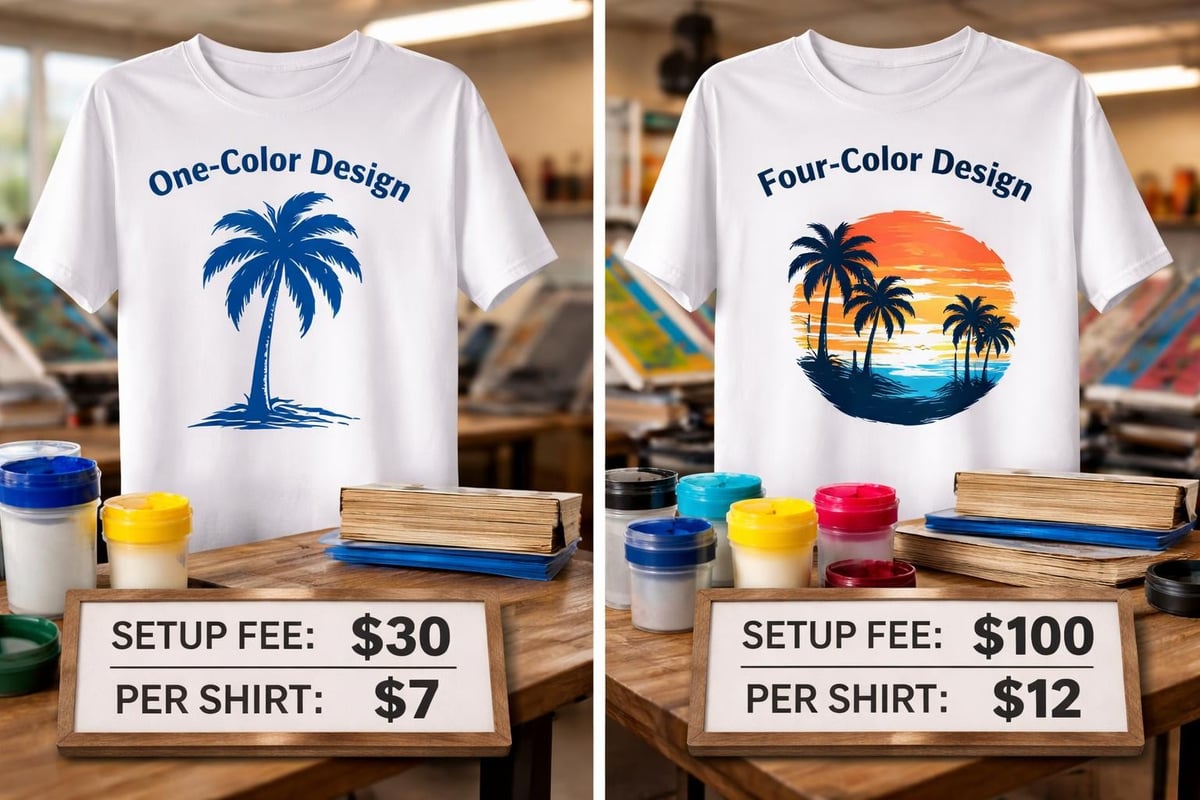
Screen printing requires creating a separate screen for each color in your design. The first color typically costs the most due to setup, while additional colors add incremental charges.
Most shops charge $15-$45 for initial screen setup, then $0.50-$2.00 per additional color per shirt. A four-color design might cost $3-$5 more per shirt than a single-color print. Screen-printed T-shirt costs break down these color-based pricing structures in detail.
DTG and Full-Color Printing
Direct-to-garment printing handles unlimited colors at no additional charge, making it ideal for photographs, gradients, and complex artwork. However, the base price per shirt remains higher than screen printing for simple designs.
Dark-colored garments require white underbase layers in DTG printing, potentially doubling the print time and increasing costs by $3-$7 per shirt compared to white or light-colored garments.
Design Cost Factors:
- Number of ink colors (screen printing)
- Design size and coverage area
- Print locations (front, back, sleeves)
- Special effects (metallic, glow-in-dark, puff ink)
- Rush artwork preparation
Print Location and Placement Fees
Where you place designs on the garment affects overall shirt printing prices through setup requirements and printing time.
Standard Versus Premium Locations
Front chest prints represent the most economical option, considered the standard location included in base pricing. Full front prints increase costs by $1-$3 per shirt due to larger screen sizes and more ink usage.
Back prints typically add $2-$5 per shirt when combined with front designs. Sleeve prints, pocket prints, or neck labels each command additional charges ranging from $1.50 to $4.00 per location. Custom T-shirt pricing guides explain how multiple print locations affect total costs.
| Print Location | Additional Cost |
|---|---|
| Front chest (standard) | Included |
| Full front | +$1-$3 |
| Back (with front) | +$2-$5 |
| Left sleeve | +$1.50-$3 |
| Right sleeve | +$1.50-$3 |
| Inside neck label | +$1-$2.50 |
All-Over and Specialty Printing
All-over printing, where designs cover the entire garment including seams, requires specialized equipment and commands premium pricing. Expect to pay $25-$50 per shirt for this technique.
Specialty placements like inside labels for branding, hem tags, or pocket prints each add complexity and cost. Strategic planning of print locations helps control expenses while achieving desired visual impact.
Rush Orders and Turnaround Time
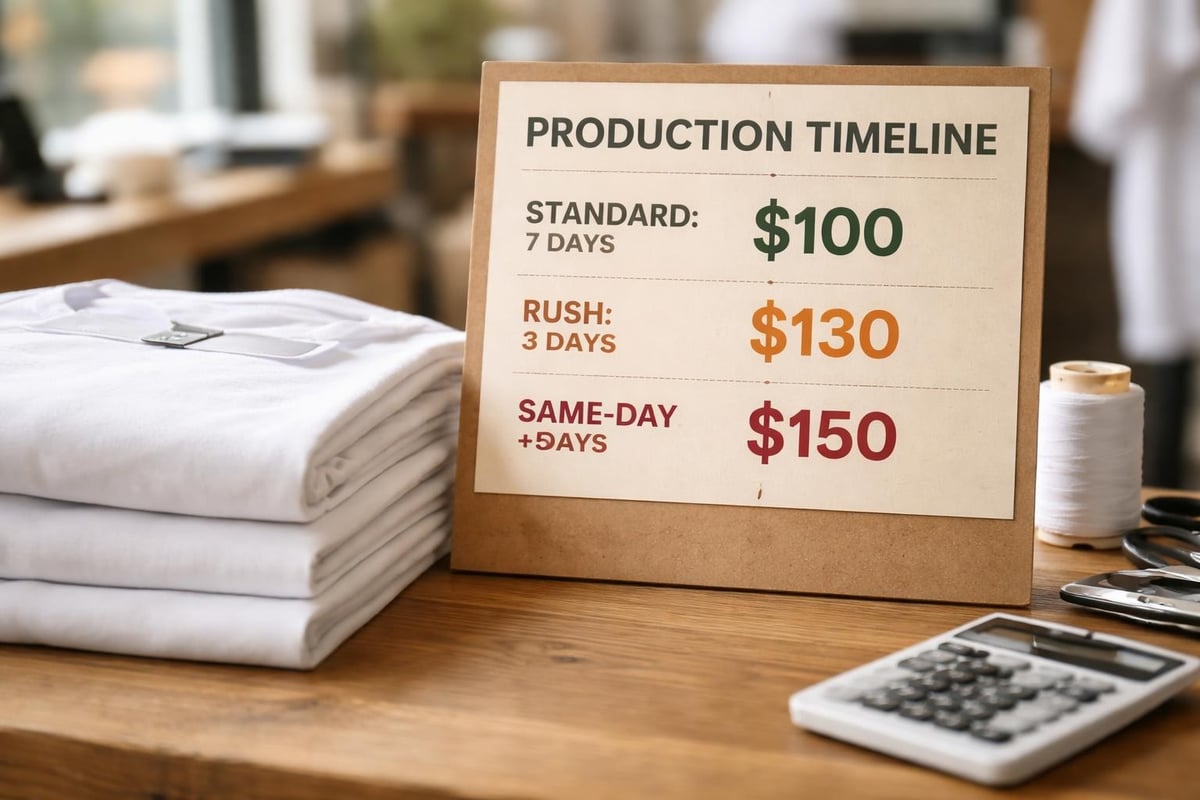
Production timelines directly correlate with shirt printing prices. Standard turnaround typically runs 7-14 business days, while expedited services carry premium charges.
Rush Fee Structures
Most custom printers offer tiered rush services. A 3-5 day turnaround might add 20-30% to the total order cost, while next-day or same-day service can increase prices by 50-100%. These fees compensate for prioritizing your order and potentially running equipment outside standard hours.
Services offering quick shirt printing near me balance speed with reasonable pricing through efficient workflows and strategic inventory management.
Typical Rush Pricing:
- Standard (7-14 days): Base price
- Rush (3-5 days): +20-30%
- Super rush (1-2 days): +40-60%
- Same day: +75-100%
Planning for Cost Savings
Ordering well in advance eliminates rush fees and provides negotiating leverage. Many print shops offer early-bird discounts for orders placed 3-4 weeks ahead of needed delivery dates.
Seasonal considerations also impact pricing and availability. Ordering during slower periods (January-March, September-October) sometimes yields better rates than peak seasons (April-August, November-December).
Hidden Costs and Additional Fees
Beyond base shirt printing prices, various supplementary charges can affect your total investment.
Setup and Artwork Charges
Setup fees cover screen creation, design digitizing for embroidery, or file preparation for DTG printing. These one-time costs range from $15 to $75 per design, though they're often waived for reorders using existing setups.
Artwork services add another layer. If you need design creation, modification, or file formatting, expect charges of $25-$100 per hour. Some shops include basic artwork cleanup in their base pricing, while complex design work incurs additional fees. How much custom T-shirts cost includes these often-overlooked expenses.
Common Additional Fees:
- Screen setup: $15-$35 per color
- Digitizing for embroidery: $20-$50 per design
- Artwork creation: $25-$100/hour
- File correction: $10-$30
- Color matching: $15-$25
- Sample shirts: $20-$50 each
Shipping and Handling
Shipping costs vary based on order size, destination, and speed. A small order of 24 shirts might ship for $10-$20 via standard ground service, while 100+ shirts could cost $30-$75. Expedited shipping adds significantly to these amounts.
Some printers include shipping in their quoted prices, while others add it at checkout. Clarifying this upfront prevents budget surprises. Local pickup options eliminate shipping charges entirely for customers near print facilities.
Comparing Quotes and Pricing Structures
Not all shirt printing prices reflect identical services. Understanding how to evaluate quotes ensures you compare apples to apples.
What to Request in Quotes
Comprehensive quotes should itemize every cost component. Request breakdowns showing garment costs separately from printing charges, setup fees, and any additional services. This transparency reveals where money goes and identifies potential savings opportunities.
Ask about price breaks at different quantities. A quote might show pricing for 24, 50, 100, and 250 units, helping you identify optimal order sizes. T-shirt printing cost ranges provide benchmarks for evaluating whether quotes align with market rates.
Essential Quote Components:
- Blank garment costs (brand, style, sizes)
- Printing method and per-shirt charge
- Setup or screen fees
- Additional color charges
- Multiple location fees
- Artwork services
- Shipping estimates
- Rush charges (if applicable)
- Total per-shirt cost at your quantity
Value Beyond Price
The cheapest quote doesn't always represent the best value. Consider turnaround reliability, print quality, customer service, and guarantees. A printer charging $1 more per shirt but delivering on time with perfect quality provides better value than one causing delays or requiring reprints.
Minimum order requirements also factor into real costs. A shop with no minimums offers flexibility for testing designs or small events, even if per-shirt prices run slightly higher than competitors requiring 50-piece minimums.
Strategies for Reducing Shirt Printing Costs
Smart planning and informed choices help you optimize shirt printing prices without sacrificing quality.
Design Optimization
Simplifying designs reduces costs across all printing methods. Limiting screen printing to 1-2 colors instead of 4-5 can cut $3-$6 per shirt. Sizing designs appropriately prevents oversized charges while maintaining impact.
Consider using simpler designs on less visible locations. A detailed full-color design on the front with a simple one-color back print balances visual interest with budget consciousness. Custom T-shirt pricing insights offer additional design cost-reduction strategies.
Money-Saving Design Tips:
- Reduce color count in screen printing
- Use single-location prints when possible
- Choose light-colored garments for DTG
- Standardize one design across all sizes
- Avoid tiny text requiring fine detail
- Reuse existing screens for reorders
Quantity and Timing Strategies
Ordering larger quantities delivers lower per-unit costs, but only if you'll use all the shirts. Calculate actual needs carefully, factoring in size distributions and realistic distribution timelines.
Consolidating multiple small orders into one larger annual order sometimes yields better pricing. Rather than ordering 25 shirts four times yearly, a single 100-shirt order reduces overall costs despite requiring upfront investment.
Planning around standard turnaround times eliminates rush fees. Building 2-3 weeks of lead time into event planning protects both budget and timeline flexibility.
Industry Pricing Trends for 2026
The custom printing landscape continues evolving, with several trends affecting shirt printing prices in 2026.
Technology and Efficiency Gains
Advanced DTG printers have reduced operating costs, making small-run custom printing more affordable. Some shops now offer DTG prices competitive with screen printing for orders under 24 pieces. Automation in screen setup and reclamation also drives down costs for traditional printing methods.
Eco-friendly inks and sustainable practices are becoming standard rather than premium options. While initially more expensive, these materials now approach conventional pricing as adoption increases.
Supply Chain Considerations
Blank garment availability and pricing fluctuate based on global supply chains. In 2026, most disruptions from previous years have stabilized, but certain premium brands occasionally experience stock limitations that affect pricing and timelines.
Domestic manufacturing of blank apparel has increased, providing more stable pricing for American-made garments. These options typically cost 15-30% more than imported blanks but offer shorter lead times and consistent quality.
Making Informed Decisions About Custom Printing
Understanding shirt printing prices empowers you to make strategic choices aligned with your goals and budget.
Matching Method to Project
Screen printing excels for simple designs in bulk quantities, offering unbeatable per-unit economics at 50+ pieces. DTG serves complex designs, small batches, or test runs where setup costs would make screen printing prohibitive. Embroidery conveys premium quality for corporate apparel, polos, or items requiring durability.
Evaluate each project individually rather than defaulting to one method. A company might use screen printing for employee uniforms, DTG for limited-edition merchandise, and embroidery for executive gift items.
Building Printer Relationships
Establishing ongoing relationships with quality printers often yields better pricing over time. Repeat customers frequently receive preferred rates, waived setup fees, or priority scheduling. Communication about upcoming needs helps printers plan capacity and potentially offer volume discounts across multiple orders.
Many custom printing services provide additional products beyond apparel, such as custom corrugated plastic signs, allowing you to consolidate vendors and negotiate better overall pricing for diverse marketing materials.
Navigating shirt printing prices requires balancing quality, quantity, and timeline considerations against budget constraints. The most successful custom printing projects result from understanding how different variables interact and making informed choices that optimize value rather than simply minimizing cost. Whether you need a dozen shirts for a small event or hundreds for a large promotion, Custom 101 Prints provides transparent pricing, expert guidance, and quality results with fast turnaround times and no minimum order requirements, helping you achieve your custom apparel goals efficiently and affordably.