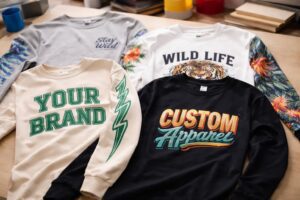
Shirt screen prints have remained a cornerstone of the custom apparel industry for decades, offering unmatched durability, vibrant colors, and cost-effectiveness for bulk orders. Whether you're creating branded merchandise for your business, designing uniforms for a sports team, or producing promotional items for an event, understanding the fundamentals of screen printing empowers you to make informed decisions about your custom apparel projects. This printing method uses mesh screens, specialized inks, and precision techniques to transfer designs onto fabric, creating professional results that withstand countless washes while maintaining their visual impact.
Understanding Screen Printing Technology
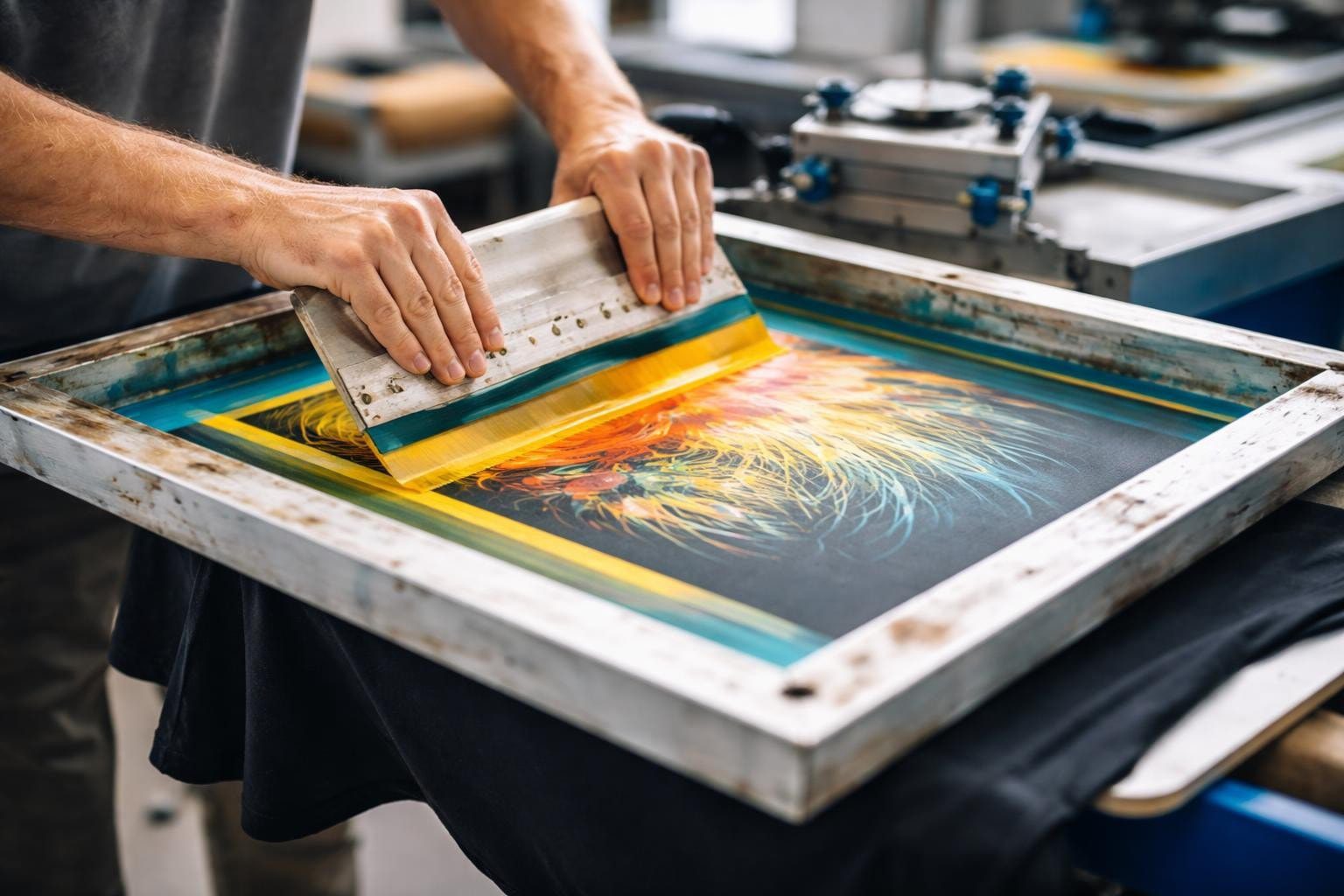
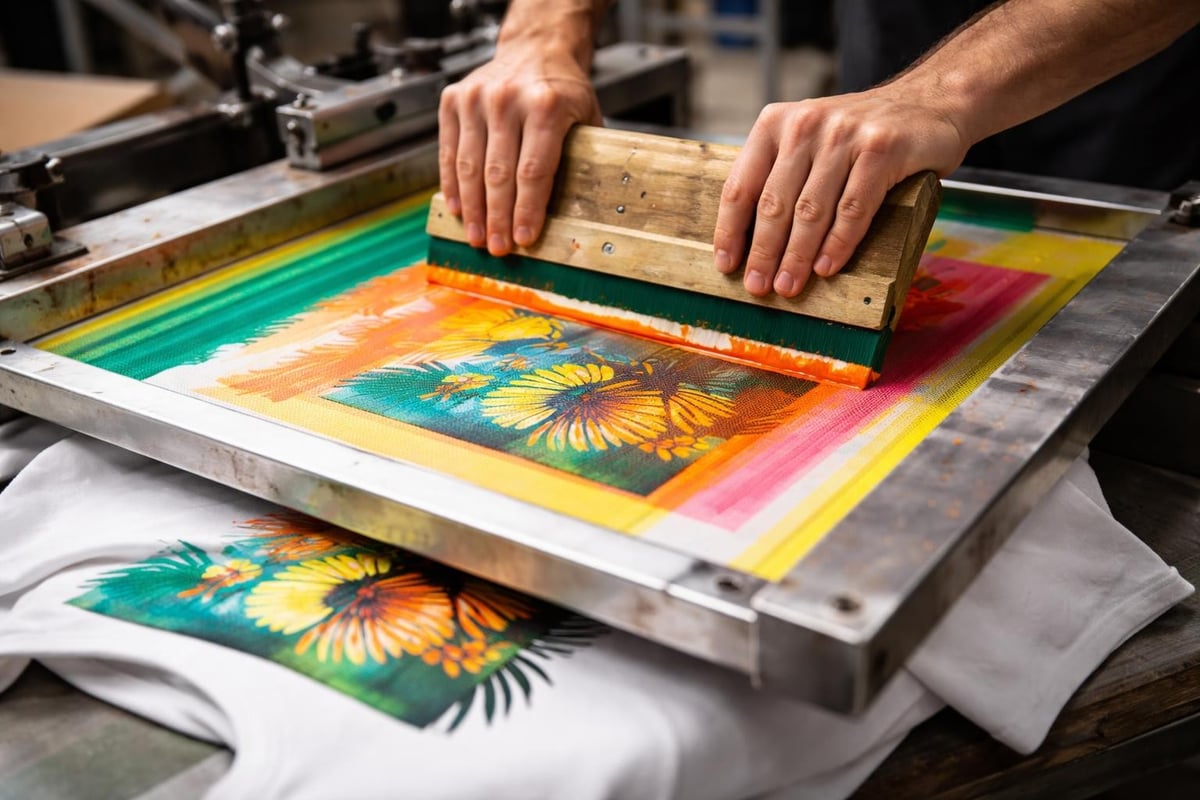
Screen printing operates on a deceptively simple principle that delivers complex results. The screen printing process involves creating stencils on mesh screens, with each color in your design requiring a separate screen. Ink passes through the open areas of the screen onto the fabric below, building up layers to create the final image.
The technology behind shirt screen prints has evolved significantly since its commercial introduction. Modern screen printing equipment offers precise registration systems that align multiple colors with exacting accuracy, ensuring crisp edges and consistent placement across hundreds or thousands of shirts. Professional shops now use computer-controlled exposure units to burn screens and automated presses that maintain consistent pressure and ink deposit.
Key Components of Screen Printing
The quality of shirt screen prints depends on several critical elements working in harmony:
- Mesh screens with specific thread counts that determine ink flow and detail level
- Emulsion that creates the stencil by blocking certain areas of the screen
- Squeegees that push ink through the screen with controlled pressure
- Specialty inks formulated for different fabric types and desired effects
- Curing equipment that permanently bonds ink to fabric fibers
Each component plays a vital role in the final product. Higher mesh counts enable finer details but require thinner inks, while lower counts work better for bold, opaque prints. The screen printing services you choose should demonstrate expertise in balancing these variables.
Ink Types and Their Impact on Quality
The ink selection for shirt screen prints dramatically affects both aesthetics and performance. Plastisol inks have dominated the industry for years due to their versatility, vibrant colors, and ease of use. These petroleum-based inks sit on top of fabric fibers, creating a slightly raised texture that many customers associate with quality screen printing.
Water-based inks offer a completely different result. They penetrate fabric fibers rather than sitting on the surface, producing an incredibly soft hand feel that's nearly indistinguishable from the shirt itself. Techniques for achieving softer prints often center on water-based and discharge inks, which have gained popularity among customers seeking premium, retail-quality apparel.
Specialty Ink Applications
Modern shirt screen prints can incorporate stunning visual effects through specialty inks:
| Ink Type | Effect | Best Applications |
|---|---|---|
| Puff ink | Raised, three-dimensional texture | Logos, bold lettering |
| Metallic ink | Reflective, shimmering finish | Premium apparel, event shirts |
| Glow-in-the-dark | Luminescent in low light | Novelty items, safety wear |
| Discharge ink | Removes garment dye, ultra-soft | Fashion-forward designs, vintage looks |
| High-density ink | Extremely raised, tactile surface | Athletic numbers, dimensional logos |
Combining multiple ink types within a single design creates sophisticated shirt screen prints that stand out in crowded markets. A logo might feature standard plastisol for most elements, puff ink for dimensional emphasis, and metallic accents for visual interest.
Design Considerations for Optimal Results
Creating effective shirt screen prints begins long before ink touches fabric. Your design's complexity directly impacts both cost and quality, as each color requires a separate screen, adding to production time and expenses. Simple designs with one to three colors often deliver the most cost-effective results for large orders.
Color separation represents one of the most critical technical aspects of screen printing. Converting your artwork into individual color layers requires expertise, especially for designs with gradients, photographic elements, or subtle color variations. Professional shops invest in specialized software and trained artists who understand how colors will interact when printed.
Resolution and Detail Limitations
While shirt screen prints excel at bold graphics and solid colors, certain design elements present challenges:
- Fine lines thinner than 0.5 points may not reproduce consistently
- Small text below 8-point size risks becoming illegible
- Intricate details with numerous tight curves can blur together
- Halftone gradients require careful screen selection and experience
Understanding these limitations helps you design with the medium's strengths in mind. Comparing screen printing to direct-to-garment methods reveals how different techniques suit different design styles.
Placement Standards and Sizing Guidelines
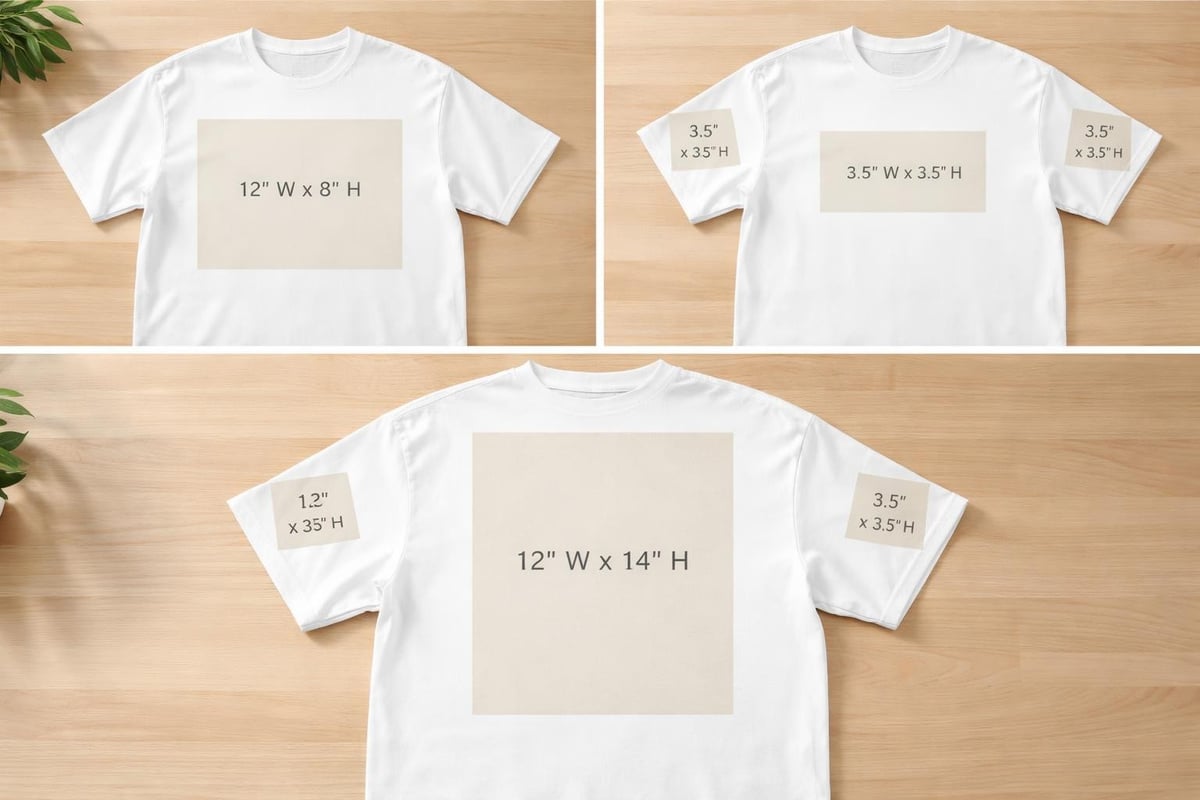
Professional shirt screen prints follow industry-standard placement positions that ensure designs look balanced and proportional on finished garments. The standard screen print placements vary by garment type and intended use, but certain conventions apply across most applications.
Common Print Locations
- Full front chest – typically 12-14 inches wide, centered 3-4 inches below the collar
- Left chest – usually 3.5-4 inches wide for logos, positioned above the pocket area
- Full back – maximum size of 12-14 inches wide by 14-16 inches tall
- Sleeve prints – 2.5-4 inches wide, placed on the upper arm area
- Lower back yoke – 8-10 inches wide, positioned between shoulder blades
These measurements serve as starting points, with adjustments based on garment size and customer preferences. Oversized prints on small shirts look disproportionate, while undersized designs on larger garments lose impact.
Durability and Care Requirements
One of the most compelling advantages of shirt screen prints lies in their exceptional durability. Properly cured screen-printed designs can withstand hundreds of wash cycles without significant fading or cracking. This longevity makes screen printing ideal for workwear, team uniforms, and promotional items that receive frequent use.
The curing process permanently bonds ink to fabric through heat application. Industrial conveyor dryers maintain precise temperatures, ensuring complete curing without scorching fabric. Under-cured prints may wash out prematurely, while over-curing can damage both ink and fabric.
Maximizing Print Longevity
Customers can extend the life of their shirt screen prints through proper care:
- Turn garments inside out before washing to minimize abrasion
- Use cold or warm water rather than hot cycles
- Avoid chlorine bleach, which degrades both ink and fabric
- Skip fabric softener, which can break down ink adhesion over time
- Air dry when possible or use low tumble heat settings
Following these guidelines, shirt screen prints regularly outlast the garments themselves, with ink remaining vibrant long after fabric shows wear in high-stress areas like collars and cuffs.
Cost Factors and Order Optimization
Screen printing delivers the most economical per-unit pricing for larger quantities, making it the preferred choice for bulk orders. The initial setup costs-creating screens, mixing custom ink colors, and configuring press settings-get distributed across the total order quantity.
A typical cost breakdown reveals how shirt screen prints become increasingly affordable:
| Order Quantity | Setup Impact | Per-Shirt Cost Range |
|---|---|---|
| 12-24 pieces | Very high per-shirt | $15-25 |
| 25-50 pieces | Moderate per-shirt | $10-18 |
| 50-100 pieces | Lower per-shirt | $7-12 |
| 100-500 pieces | Minimal per-shirt | $5-8 |
| 500+ pieces | Negligible per-shirt | $3-6 |
Additional colors increase costs less dramatically on large orders than small ones. A six-color design on 500 shirts might add only $1-2 per piece compared to a two-color design, while the same color addition on 24 shirts could increase per-unit costs by $5-7.
Production Timelines and Rush Services
Standard production for shirt screen prints typically requires 7-10 business days from artwork approval to delivery. This timeline allows for screen creation, press setup, printing, curing, quality inspection, and final preparation. Understanding these stages helps set realistic expectations.
The various printing techniques available today each have different production requirements, with screen printing generally faster than embroidery but slower than direct-to-garment printing for very small quantities.
Factors Affecting Turnaround Time
Several variables impact how quickly your shirt screen prints reach completion:
- Design complexity – simpler designs with fewer colors print faster
- Order quantity – larger runs require more press time but benefit from continuous production
- Garment availability – in-stock items ship faster than special-order blanks
- Seasonal demand – peak periods (back-to-school, holidays) may extend timelines
- Special requirements – custom tags, individual folding, or unique packaging add time
Many shops, including Custom 101 Prints, offer rush services for time-sensitive projects, completing orders in 3-5 business days for an additional fee.
Quality Control and Industry Standards
Professional shirt screen prints undergo rigorous quality checks throughout production. Experienced printers inspect registration accuracy, color consistency, ink coverage, and curing completeness before garments leave the production floor. Industry safety and quality standards help ensure consistent results.
Common Quality Issues and Solutions
| Problem | Cause | Prevention |
|---|---|---|
| Color misalignment | Poor screen registration | Invest in quality equipment, careful setup |
| Ink cracking | Under-curing or wrong ink type | Proper cure temperature, appropriate ink selection |
| Fading | Inadequate ink deposit | Correct mesh count, proper squeegee pressure |
| Bleeding | Excess ink or wrong fabric prep | Control ink viscosity, pre-treat certain fabrics |
Reputable printers guarantee their shirt screen prints against defects, offering replacements for items that fail to meet quality standards due to production errors rather than customer care issues.
Advanced Techniques for Visual Impact
Contemporary shirt screen prints can achieve stunning effects through advanced printing methods. Techniques that make screen-printed designs stand out include simulated process color, which recreates photographic images using halftone dots in multiple colors.
Four-color process printing (CMYK) adapts traditional printing methods to screen printing, allowing for complex graphics with unlimited color variations. This technique works best on white or very light garments, as the transparent inks rely on the fabric color showing through.
Combining Printing Methods
Hybrid approaches create unique shirt screen prints by combining multiple decoration techniques:
- Screen printing as a base layer with embroidered accents for dimensional interest
- DTG printing for photographic elements with screen-printed borders or text
- Screen printing with laser-engraved leather patches for premium applications
- Traditional plastisol prints with water-based discharge for contrasting textures
These combinations leverage the strengths of each method while creating distinctive products that stand out in competitive markets.
Fabric Compatibility and Performance
Different fabric types respond uniquely to shirt screen prints, with cotton remaining the gold standard for screen printing applications. Its natural fibers accept and hold ink exceptionally well, producing vibrant colors and excellent wash durability. Cotton blends incorporating polyester perform admirably, though 100% polyester requires specialized inks to prevent dye migration.
Performance fabrics designed for athletic wear present specific challenges for screen printing. Their moisture-wicking properties and stretch characteristics demand inks formulated to remain flexible during intense activity. Many athletic teams and corporate clients specifically request shirt screen prints on technical fabrics for their combination of branding and functionality.
Fabric-Specific Considerations
- 100% cotton – Excellent ink adhesion, vibrant colors, potential for shrinkage
- Cotton-poly blends – Good durability, minimal shrinkage, slightly less vibrant than pure cotton
- 100% polyester – Requires special inks, risk of dye migration with dark fabrics
- Tri-blends – Ultra-soft hand feel, good print quality, premium pricing
- Performance fabrics – Need stretch inks, may show print texture more prominently
Understanding how various fabrics interact with screen printing inks helps you select the right garment blank for your intended use and desired aesthetic.
Environmental Considerations
The screen printing industry has made significant strides toward sustainability in recent years. Water-based inks eliminate many of the volatile organic compounds found in traditional plastisol formulations, reducing environmental impact and improving workplace air quality for production staff.
Eco-conscious businesses increasingly request shirt screen prints using sustainable practices:
- Eco-friendly inks – phthalate-free, PVC-free, biodegradable options
- Organic garments – certified organic cotton blanks from responsible sources
- Water reclamation – systems that filter and reuse screen-cleaning water
- Energy-efficient curing – LED and infrared dryers that reduce power consumption
- Waste reduction – programs to recycle misprints and unused garments
These practices demonstrate that high-quality shirt screen prints don't require compromising environmental values. Many customers specifically seek providers who prioritize sustainability alongside print quality.
Selecting the Right Printing Partner
Choosing a screen printing provider involves evaluating multiple factors beyond basic pricing. The classification standards for screen printing businesses help establish industry benchmarks, but individual shop capabilities vary widely.
Evaluation Criteria Checklist
When researching screen printing services for your shirt screen prints, assess these key areas:
- Portfolio quality – Request samples demonstrating work similar to your needs
- Equipment capabilities – Modern, well-maintained presses produce superior results
- Minimum order requirements – Some shops won't accept small orders
- Turnaround flexibility – Rush capabilities for urgent projects
- Design assistance – In-house artists who can refine or create artwork
- Customer service – Responsive communication throughout the process
The screen printing options available through different providers range from basic single-color prints to complex, multi-technique applications requiring specialized expertise.
Custom Applications Beyond Basic Tees
While standard t-shirts represent the majority of shirt screen prints, the technique adapts beautifully to diverse garment types and promotional items. Hoodies, sweatshirts, polo shirts, and button-down work shirts all accept screen printing, though each presents unique considerations.
Heavyweight fleece requires higher ink deposits to achieve opacity, while performance polos demand stretch inks that won't crack during wear. Button-front shirts must be printed carefully to avoid placard impressions that show through when buttoned.
Expanding Product Lines
Businesses leveraging shirt screen prints often diversify into complementary products:
- Tote bags – Large print areas, high visibility, practical utility
- Aprons – Durable workwear for food service and retail
- Bandanas – Affordable promotional items, event giveaways
- Patches – Screen-printed fabric pieces for sewing onto garments
- Pennants and banners – Oversized promotional displays
This versatility makes screen printing a comprehensive solution for businesses seeking cohesive branded merchandise across multiple product categories. Exploring promotional items reveals the full potential of screen printing technology.
Artwork Preparation Best Practices
Preparing artwork for shirt screen prints requires understanding technical specifications that ensure optimal results. Vector graphics created in programs like Adobe Illustrator produce the cleanest separations, while bitmap images need sufficient resolution-typically 300 DPI at the printed size.
Color matching presents particular challenges, as screen colors don't always translate directly to printed results. Pantone Matching System (PMS) colors provide standardized references that ensure consistency across different production runs and even different printers.
File Preparation Guidelines
Submit artwork that meets these professional standards:
- Vector formats (AI, EPS, PDF) for logos and text-based designs
- High-resolution raster files (PSD, TIFF) at 300 DPI minimum for photographic elements
- Colors specified using Pantone references rather than RGB or CMYK values
- All fonts converted to outlines or embedded to prevent substitution issues
- Transparent backgrounds unless background color is part of the design
Many professional shops offer design services that convert rough concepts or low-quality files into print-ready artwork, ensuring your vision translates perfectly to finished shirt screen prints.
Mastering the fundamentals of shirt screen prints empowers you to create durable, visually striking custom apparel that serves your business or organization for years. From understanding ink types and fabric compatibility to optimizing order quantities and selecting the right printing partner, each decision impacts your final results. Whether you need a dozen custom shirts for a special event or thousands of promotional items for a major campaign, Custom 101 Prints offers the expertise, equipment, and personalized service to bring your vision to life with fast turnaround times and no minimum order requirements.